
Tokyo for women travelling alone
Trains to the second, konbini at 3am, and solo dining as the norm
- Budget
- $70 a day
- On foot
- somewhat walkable
- Getting around
- Excellent
- Best months
- March to May, September to November
- First solo trip
- Good first trip
- Wifi
- Excellent
- English
- Moderate
- Places to stay
- 8+ read
01 of 08
The read
Tokyo is the world's most organised city for a woman on her own, and most travellers feel that within 48 hours.
What holds up
- Train signs and Google Maps give exact platform numbers in English, making navigation independent from the first day.
- Solo dining is built into the city's architecture: ramen counters, individual booths, and standing noodle bars are designed for one.
- Women-only train carriages operate on most lines during morning rush hours, and capsule hotels with women-only floors sit in central neighbourhoods.
What to weigh
- Trains stop around midnight. Where you sleep decides whether you walk home or pay for a taxi, so base yourself near your evening plans.
- The most in-demand experiences, including teamLab and the Toyosu tuna auction, require advance booking and can sell out weeks ahead.
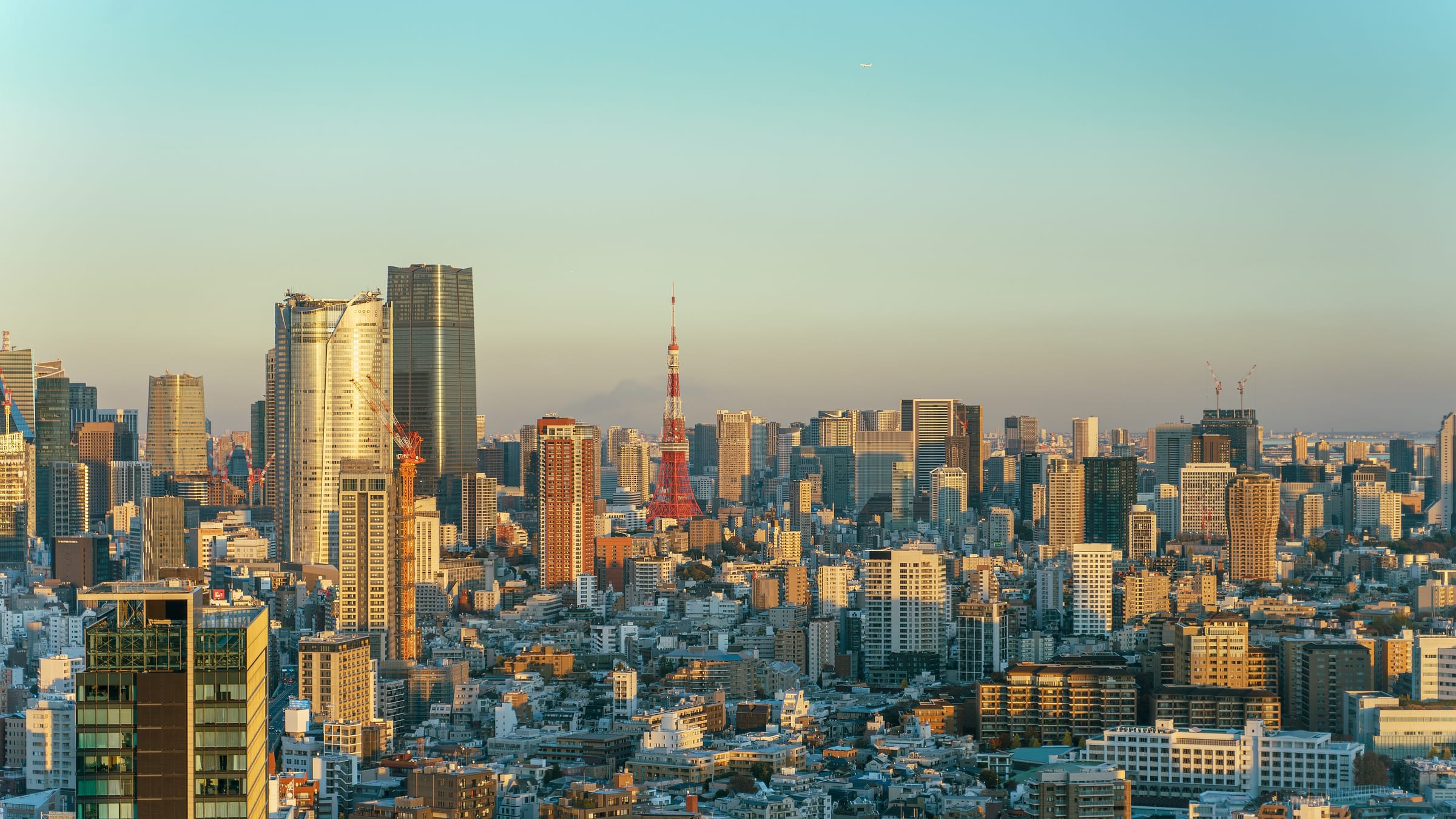
Tokyo is one of the easiest major cities for a solo woman, and the trains carry most of it. Trains run on time to the second, convenience stores are open 24 hours with genuinely good food, and violent crime is almost nonexistent. You can walk anywhere at 3am and feel completely at ease.
The city is enormous, so pick a base near a train line. Shinjuku and Shibuya are central with good transit links, and clean business hotels cluster around both. Shimokitazawa and Yanaka offer a quieter, more residential feel. A 72-hour metro pass covers most of what you need. Solo dining is built into the culture: ramen counters, conveyor belt sushi, and ichiran-style single booths mean eating alone is the norm, not the exception.
Budget ranges widely. You can eat very well for the price of a sandwich, or spend a great deal at a tiny omakase counter. Capsule hotels designed for women are clean, private, and worth trying at least once. The biggest adjustment is the scale: give yourself permission to see one neighbourhood per day rather than trying to cover everything.
02 of 08
Common questions
What people ask about Tokyo, answered with specifics rather than in general terms.
- Is Tokyo a good place to travel alone?
- Tokyo is one of the easier places in the region to travel alone for the first time. Train signs and Google Maps give exact platform numbers in English, making navigation independent from the first day.
- How much does Tokyo cost a day?
- Around $70 a day covers a bed, food and local transport for one person in Tokyo.
- How do you get around Tokyo?
- Trains are everything. JR Yamanote Line circles the city and connects all major stations. Tokyo Metro and Toei subway lines fill in the gaps. Google Maps gives exact train times and platform numbers. An IC card (Suica or Pasmo) works on all lines and at konbini.
- When is the best time to visit Tokyo?
- March to May, September to November is the window most travellers aim for in Tokyo. Trains stop around midnight. Where you sleep decides whether you walk home or pay for a taxi, so base yourself near your evening plans.
- Where should you stay in Tokyo on your own?
- Distances in Tokyo are larger than they look on a map, so the area you pick matters more than the property. Trains to the second, konbini at 3am, and solo dining as the norm
03 of 08
Where to stay
Each of these has been read rather than listed. The full set is on the stays page.
- Aman Tokyo
The spa has been described as temple-like.
hotel · 4.4 from 1900 reviews - TRUNK(HOTEL) CAT STREET
Front desk staffed 24 hours, with check-in from 2pm, off Cat Street in Shibuya.
hotel · 4.1 from 1814 reviews · about $400 a night - Nui. Hostel & Bar LoungeWomen only
A communal kitchen and free Wi-Fi are available to guests.
hostel · 4.4 from 1381 reviews - CITAN Hostel
Women return for the pod curtains that close on all sides and the bathrooms cleaned daily without fail. The underground bar is one of Tokyo's quieter finds; the cafe doubles as a proper workspace.
hostel · 4.5 from 1010 reviews - &AND HOSTEL AKIHABARA
Capsule-style pods and dorm beds with individual privacy curtains, USB charging ports.
hostel · 4.2 from 895 reviews - Asakusa Kokono Club Hotel
Women come here to walk to Senso-ji at dawn, before the tour groups arrive. The neighbourhood has traditional eateries within steps and the station within walking distance. No honest catch surfaces in what women report.
hotel · 4.6 from 433 reviews · about $150 a night - TOKYO-W-inn Asakusa
Women's-only room is quiet and clean, within walking distance of Senso-ji and close to the train station. The common area is small, which the reviews note but do not mind much.
hotel · 4.4 from 336 reviews - Book and Bed TokyoWomen only
The reviews are too thin for a specific read.
hostel
04 of 08
What to know
- 01
Women-only cars on most train lines
Marked with pink signs on platforms and inside trains. Available during morning rush (roughly 7:30-9:30am weekdays). Entirely optional but useful on packed commuter lines like the Chuo and Odakyu.
- 02
Solo dining is a non-event
Ramen counters, conveyor belt sushi, and ichiran-style individual booths are designed for solo eating. Department store food courts and standing soba shops are quick solo lunch options. No one notices or cares.
- 03
Neighbourhood character varies dramatically
Roppongi has a nightclub scene with a different energy than the rest of Tokyo. Shimokitazawa and Koenji are indie and relaxed. Ginza is polished and expensive. Asakusa is traditional. Choose accommodation based on the experience you want.
- 04
Convenience stores are genuinely useful
7-Eleven, Lawson, and FamilyMart are on every block. They have ATMs that accept foreign cards, quality prepared meals, event tickets, wifi, and clean restrooms. They function as a baseline service layer across the city.
- 05
Capsule hotels have women-only floors
Modern capsule hotels (Nine Hours, First Cabin) have dedicated women-only floors with separate entry. They are clean, quiet, and centrally located. Useful for a night or as a base for early morning activities.
05 of 08
Getting around
- 01
Trains are everything
JR Yamanote Line circles the city and connects all major stations. Tokyo Metro and Toei subway lines fill in the gaps. Google Maps gives exact train times and platform numbers. An IC card (Suica or Pasmo) works on all lines and at konbini.
- 02
Walking is best within neighbourhoods
Each station area is its own walkable village. Shibuya to Harajuku is 15 minutes on foot. Yanaka to Ueno is 20 minutes. Between neighbourhoods, always take a train.
- 03
Apps that work
Google Maps is accurate for transit. Navitime and Japan Travel apps offer alternative route suggestions. Suica cards can be added to Apple Wallet. Taxi apps (GO, S.RIDE) work but taxis are rarely needed.
- 04
Avoid rush hour if possible
7:30-9:30am trains are genuinely packed to capacity on major lines. Women-only cars are available on most lines during morning rush. If your schedule is flexible, travel before 7am or after 10am.
06 of 08
How the day runs
Tsukiji outer market opens at 5am and is best before 8am. Parks (Yoyogi, Shinjuku Gyoen, Meiji Shrine) are peaceful before 9am. Specialty coffee shops open around 8am in Shibuya, Nakameguro, and Koenji. The fish market at Toyosu requires a reservation for the tuna auction viewing (5:30am).
Trains start at 5am. The first hour is surprisingly quiet.
Department store basement floors (depachika) are incredible for lunch and food browsing. Museums like teamLab, Mori Art, and the Nezu Museum are good afternoon activities. Neighborhood walking works well: pick one area (Yanaka, Koenji, Daikanyama) and explore on foot.
Harajuku's Takeshita Street is extremely crowded on weekends. Backstreets (Ura-Harajuku) are calmer.
Golden Gai in Shinjuku has 200+ tiny bars, many welcoming solo visitors. Yakitori alleys under train tracks (Yurakucho, Shinbashi) are atmospheric and solo-friendly. Shibuya and Roppongi have club scenes. Shimokitazawa has live music venues.
Golden Gai bars seat 6-8 people. Some charge a seating fee. Check the door sign.
Trains stop around midnight but the city does not. Shinjuku, Shibuya, and Roppongi stay active. 24-hour ramen chains, konbini, and manga cafes are everywhere. Karaoke runs all night with solo booths available. Night buses connect major stations.
Manga cafes with private booths and showers are a legitimate overnight option if you miss the last train.
07 of 08
What to eat
- 01
Tsukiji-style Sushi
Nigiri sushi made with the freshest fish, shaped by hand, and served piece by piece at a counter. Watching the chef work is part of the experience.
Sushi Dai or Daiwa Sushi at Toyosu Market (early morning). For no queues, try standing sushi bars in Shinjuku.
- 02
Ramen
Tokyo-style shoyu ramen features a soy-based broth, thin wavy noodles, chashu pork, and a seasoned egg. Every shop has its own formula.
Fuunji in Shinjuku (tsukemen style), or Tokyo Ramen Street in Tokyo Station basement.
- 03
Yakitori
Skewered chicken parts grilled over bincho charcoal, seasoned with either tare (sweet soy) or shio (salt). Order the liver and the skin.
Yakitori Alley (Yurakucho) under the train tracks. Tiny stalls, cold beer, smoke everywhere.
- 04
Monjayaki
Tokyo's answer to okonomiyaki: a runny, gooey batter cooked on a hot griddle and scraped off with tiny spatulas. Messier and more fun.
Monja Street in Tsukishima. Pick any busy shop and the staff will cook it for you.
- 05
Onigiri
Rice balls wrapped in crisp nori with fillings like salmon, pickled plum, or mentaiko. The ultimate convenience food, elevated.
Onigiri Asakusa Yadoroku (Japan's oldest onigiri shop), or any 7-Eleven (seriously, they're excellent).