
Kyoto for women travelling alone
Cyclable end to end in under an hour, and Nishiki Market stalls are built for eating alone.
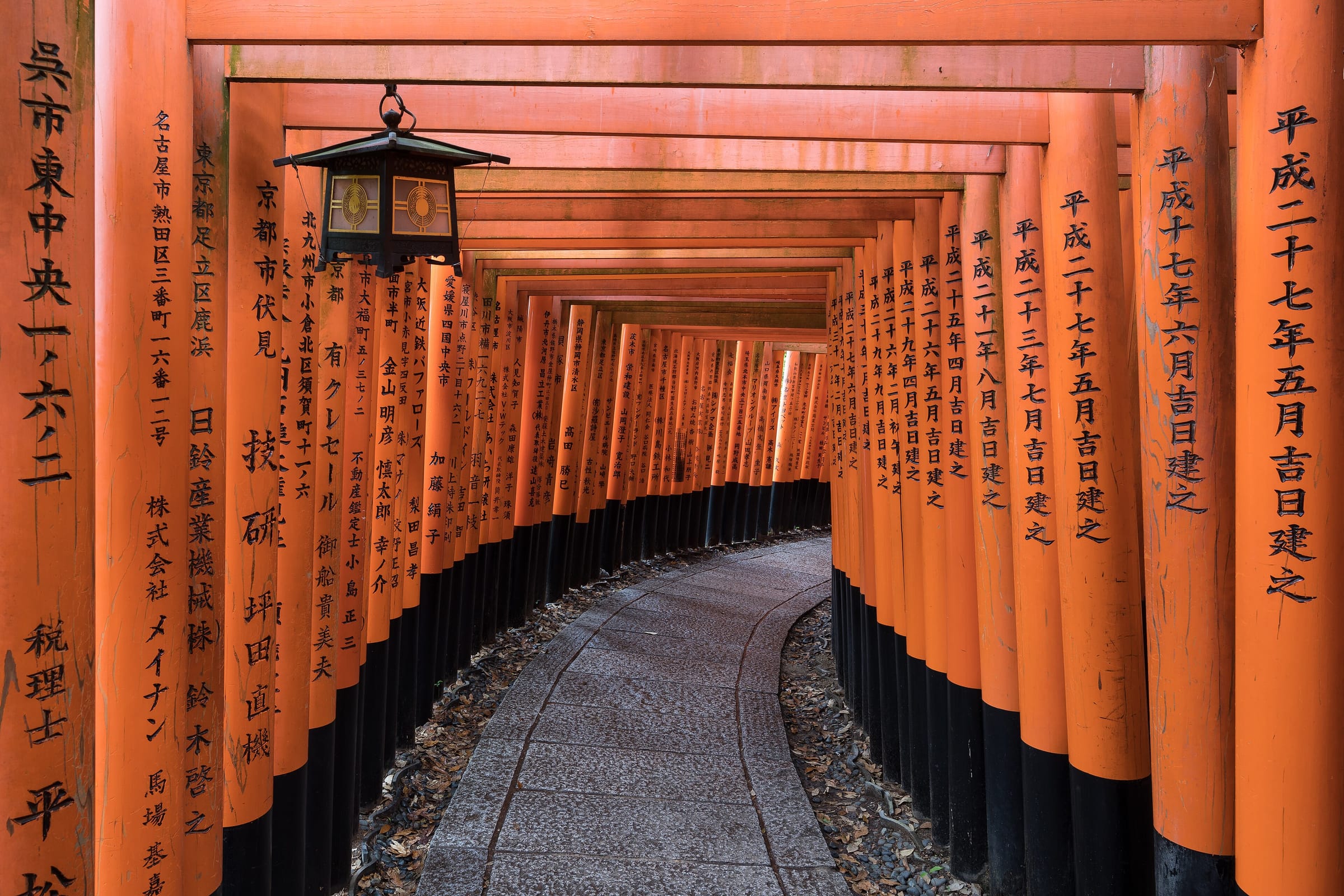
- Budget
- $65 a day
- On foot
- very walkable
- Getting around
- Excellent
- Best months
- March to May, October to November
- First solo trip
- Good first trip
- Wifi
- Excellent
- English
- low
- Places to stay
- 8+ read
01 of 08
The read
Kyoto rewards solo women who plan for early mornings, a bicycle, and a city centre base.
What holds up
- Picture menus, plastic food displays, and counter seating make ordering alone completely natural, even with no shared language.
- The city runs on a flat grid, and rental bikes are available steps from Kyoto Station with multilingual staff.
- Solo women are a visible part of the visitor mix, particularly at quieter temples, and guesthouses with common areas are reliable places to meet people.
What to weigh
- Cherry blossom season (late March to April) and autumn colour season (November) are intensely crowded; popular spots like Fushimi Inari become uncomfortable around sunrise if you are not very early.
- English is low outside tourist areas, and some traditional restaurants do not seat foreign visitors; checking in advance saves the awkward moment at the door.
Kyoto moves at a different speed. Bamboo groves, moss gardens, and wooden machiya townhouses line streets that have looked roughly the same for centuries. The city is compact enough that a bicycle is the best way to explore, and most temples cluster in walkable zones on the east and northwest sides.
Stay in the Higashiyama district for proximity to the main temple corridor, or try a traditional ryokan guesthouse for tatami floors and communal baths. Budget hotels cluster near Kyoto Station. Solo dining is straightforward: the nishiki market has dozens of stalls where you eat standing up, and most restaurants are used to single diners.
The pace here rewards patience. Visit Fushimi Inari at 6am before the crowds arrive. Sit with matcha in a teahouse garden. Walk the Philosopher's Path without a plan. Kyoto is quiet and orderly, and the formality of Japanese public life means you are rarely approached. Buses and trains are punctual and well-signed in English.
02 of 08
Common questions
What people ask about Kyoto, answered with specifics rather than in general terms.
- Is Kyoto a good place to travel alone?
- Kyoto is one of the easier places in the region to travel alone for the first time. Picture menus, plastic food displays, and counter seating make ordering alone completely natural, even with no shared language.
- How much does Kyoto cost a day?
- Around $65 a day covers a bed, food and local transport for one person in Kyoto.
- How do you get around Kyoto?
- Cycling is the primary way to move. Flat terrain, dedicated lanes on many streets, and rental shops everywhere. A day rental runs from most guesthouses or dedicated shops near Kyoto Station. The city grid makes navigation intuitive.
- When is the best time to visit Kyoto?
- March to May, October to November is the window most travellers aim for in Kyoto. Cherry blossom season (late March to April) and autumn colour season (November) are intensely crowded; popular spots like Fushimi Inari become uncomfortable around sunrise if you are not very early.
- Where should you stay in Kyoto on your own?
- Distances in Kyoto are larger than they look on a map, so the area you pick matters more than the property. Cyclable end to end in under an hour, and Nishiki Market stalls are built for eating alone.
03 of 08
Where to stay
Each of these has been read rather than listed. The full set is on the stays page.
- PIECE HOSTEL SANJO
Free breakfast and Wi-Fi in Gion, with a communal kitchen; reception open 8am to midnight.
hostel · 4.7 from 1685 reviews - Backpackers Hostel K's House Kyoto
Two shared kitchens, a cafe bar and a furnished rooftop terrace in Higashiyama.
hostel · 4.5 from 1519 reviews - Ace Hotel Kyoto
A 24-hour gym is available on site, along with Mexican and Italian dining options.
hotel · 4.6 from 1358 reviews - PIECE HOSTEL KYOTO
Dorms and private rooms in Gion, with bike rentals and an airport shuttle.
hostel · 4.7 from 1309 reviews - BnA Alter Museum
Rooms are individual artworks in Gion, staffed 24 hours, check-in from 2pm.
hotel · 4.7 from 620 reviews · about $150 a night - Guesthouse Soi
Maki-san, the co-owner, is hands-on cleaning and present throughout the day, which tells you something about how the place runs. The communal kitchen and breakfast area are genuinely well kept. Reviews do not mention evening staffing hours, so worth checking ahead.
homestay · 4.8 from 456 reviews · about $45 a night - Wise Owl Hostels Kyoto
Offers both dorm beds and private rooms, all with shared bathroom facilities.
hostel · 4.2 from 266 reviews - Ryokan Hostel Gionhostel · 4.5 from 257 reviews
04 of 08
What to know
- 01
Solo dining culture is strong
Counter seats at ramen shops, izakayas, and sushi bars are designed for solo diners. Pointing at plastic food displays or picture menus works perfectly. No one will think twice about a woman eating alone.
- 02
Gion etiquette matters
The Gion district has signs asking visitors not to photograph geiko/maiko without permission. Side streets in Gion are residential, not tourist attractions. Blocking narrow lanes for photos draws real frustration from residents.
- 03
Temple dress is relaxed but respectful
No strict dress code at most temples, but shoulders and knees covered is appreciated at important sites. Shoes come off at temple interiors. Carry socks if wearing sandals.
- 04
Accommodation areas have different feels
Kyoto Station area is convenient but characterless. Higashiyama is atmospheric but far from nightlife. City centre (Karasuma-Shijo) balances access to everything. Guesthouses and hostels with common areas are where solo travellers tend to meet.
05 of 08
Getting around
- 01
Cycling is the primary way to move
Flat terrain, dedicated lanes on many streets, and rental shops everywhere. A day rental runs from most guesthouses or dedicated shops near Kyoto Station. The city grid makes navigation intuitive.
- 02
Bus network covers everything
Kyoto buses reach every major temple and neighbourhood. The 100, 101, and 205 routes cover most tourist sites. Google Maps has accurate real-time bus tracking. Rush hour (8-9am, 5-7pm) buses get packed.
- 03
Walking is practical in clusters
Higashiyama, Arashiyama, and the Imperial Palace area are all walkable zones. Between zones, you need a bus or bike. Walking Kyoto Station to Kinkaku-ji takes over an hour.
- 04
Trains for longer distances
JR and Hankyu lines connect Kyoto Station to Arashiyama (15 min) and Osaka (30 min). The Keihan line runs along the east side to Fushimi. IC cards (ICOCA, Suica) work on everything.
06 of 08
How the day runs
Temples open at 6am and are nearly empty until 9am. This is the window for Fushimi Inari, Kinkaku-ji, or any photogenic spot. Bakeries and kissaten (old-school coffee shops) open around 7am. The Nishiki Market corridor gets busy by 10am.
Many temples have different opening hours by season. Check before heading out early.
Peak tourist hours at major sites. Better to visit smaller temples, wander machiya neighborhoods (Nishijin, Okazaki), or explore the covered shopping arcades. Teahouses serve matcha and wagashi throughout the afternoon.
The eastern hills (Higashiyama walk from Kiyomizu to Ginkaku-ji) takes about 3 hours at a relaxed pace.
Pontocho alley and Kiyamachi street are the main nightlife strips, both along the river. Most izakayas welcome solo diners at counter seats. Gion gets quiet after dark except for the occasional geiko (geisha) spotting. Convenience stores (konbini) are the reliable late-night food option.
Solo counter dining is completely normal and often preferred by locals too.
07 of 08
What to eat
- 01
Kaiseki
Multi-course Japanese haute cuisine that changes with the seasons. Each dish is a small work of art in flavour, texture, and presentation.
Gion Nanba for an approachable experience. For a splurge, Kikunoi has a lunch kaiseki that's more accessible.
- 02
Matcha Everything
Kyoto is Japan's matcha capital. Thick koicha tea, matcha parfaits, matcha soft serve, matcha warabi mochi. The real stuff, not the sugary kind.
Nakamura Tokichi in Uji (the matcha hometown), or Tsujiri on Shijo-dori.
- 03
Yudofu
Simple simmered tofu in a light kombu broth, served with dipping sauce. Zen temple food that's surprisingly satisfying.
Okutan near Nanzen-ji temple. They've been serving yudofu for over 300 years.
- 04
Nishin Soba
Buckwheat noodles in a delicate dashi broth topped with sweet-simmered herring. A Kyoto winter classic.
Matsuba Soba near Shijo-Kawabata. Operating since 1861.
08 of 08
Neighbourhoods
- 01
Gion
Kyoto's geisha district with tea houses and preserved wooden streets
- 02
Higashiyama
Temple-lined hillside walk from Kiyomizu-dera to Gion
- 03
Arashiyama
Bamboo groves and riverside walks on Kyoto's western edge