
Da Lat for women travelling alone
Cool highlands with French villas and coffee
- Budget
- $20 a day
- On foot
- Walkable
- Getting around
- Limited
- Best months
- November to March
- First solo trip
- Some experience helps
- Wifi
- fair
- English
- low
- Places to stay
- 8+ read
01 of 09
The read
Da Lat rewards a woman who shows up curious: the city does the welcoming for you.
What holds up
- Grab, the ride-hailing app used across Southeast Asia, works throughout the city and out to waterfalls and viewpoints.
- The walkable core around Xuan Huong Lake and the central market keeps you close to food, cafes, and the night market without needing transport.
- Da Lat is primarily a domestic Vietnamese tourism destination, meaning you blend into busy, sociable crowds rather than standing out as a lone foreigner.
What to weigh
- English is genuinely limited, on menus and in interactions. A translation app and a few Vietnamese phrases will carry you further than you expect.
- The airport is 30 kilometres from town, and the shuttle bus stops running at 8pm. Sort your transfer before you land.
Da Lat is Vietnam's hill station, about 1,500 metres up in the Central Highlands. The temperature stays between 15 and 25 degrees year-round, which is a welcome break from the heat everywhere else in the country. The city has a French colonial history that shows up in its architecture, pine forests, and flower gardens.
The central market (Cho Da Lat) is the heart of the city, with food stalls on the upper level and produce below. Strawberries, artichokes, and avocados grow locally and show up in everything. Vietnamese domestic tourists love Da Lat, so the crowd is more local than backpacker. Grab works here, and the city centre is walkable.
The surrounding countryside has waterfalls, coffee farms, and flower greenhouses. Canyoning with Highland Sport Travel is a well-regarded day activity. Solo women are less common here than in the beach cities. Locals are used to visitors and the centre is easy to walk. Accommodation runs from guesthouses to boutique stays near the lake.
02 of 09
Who this suits
Da Lat works well for solo travellers who want an easy pace, good coffee, and a base for outdoor activities without the coastal crowds. It suits people who find Vietnamese cities at sea level too hot or too overwhelming, and who are comfortable on a motorbike or willing to take day tours.
03 of 09
Common questions
What people ask about Da Lat, answered with specifics rather than in general terms.
- Do I need a motorbike to enjoy Da Lat, or can I manage without one?
- The central area around the lake and market is walkable. For anything outside the city, including the Langbiang hike, the waterfalls, or the flower farms, you need either a motorbike or a booked day trip. Most guesthouses arrange tours if you'd rather not ride yourself.
- How cold does it actually get? What should I pack?
- In dry season, daytime temperatures sit around 18-22°C and drop to 10-12°C at night. A fleece and a windproof jacket are not optional. If you arrive unprepared, the market sells inexpensive jackets, but the sizing runs small.
- Is Da Lat expensive compared to the Vietnamese coast?
- Mid-range accommodation costs more than comparable places in Mui Ne or Nha Trang because the city gets heavy domestic tourism. Food and transport are roughly similar to other Vietnamese cities. Budget travellers will find it manageable; it's not a splurge destination unless you stay at the Dalat Palace.
- What's the best way to get to Da Lat from Ho Chi Minh City or Nha Trang?
- From Ho Chi Minh City, the sleeper bus takes about seven hours and is the standard option; several operators run direct routes. From Nha Trang, it's about four hours by bus. Flying is possible but the airport is small and connections are limited. The bus drops you near the central market, which is convenient.
- Can I drink the water or eat street food without concern?
- Drink bottled or filtered water; tap water is not for drinking. Street food at the market is cooked to order and high turnover, which is the best indicator you can have. The banh mi counters and market stalls are fine. Avoid cut fruit from vendors who don't wash it in front of you.
- What do solo women typically find unexpected about Da Lat?
- How quiet it is after 10pm, even in the centre. And how much of the tourism is domestic Vietnamese couples, which means the city's character is shaped by that, not by backpacker culture. It's a city that Vietnamese people genuinely love, which makes it feel less performed than some tourist destinations.
04 of 09
Where to stay
Each of these has been read rather than listed. The full set is on the stays page.
- Goldient Boutique Hotel DaLathotel · 4.9 from 4587 reviews
- Ana Mandara Villas Dalathotel · 4.6 from 2425 reviews · about $150 a night
- The Mist Boutique Hotel DaLat
The mountain view rooms are clean and come with everything guests need.
hotel · 5.0 from 1296 reviews - TIGON DALAT HOSTEL
Cafe and bar on site, forest views, reception open 24 hours in the city centre.
hostel · 4.4 from 1016 reviews - Da Phu hill
The mist and clouds are best viewed at sunrise around 5:30am.
hotel · 4.5 from 872 reviews - Cozy Nook HostelWomen only
Female-only dorms in the city centre, with check-in from 2pm.
hostel · 4.8 from 500 reviews - Mooka’s Home - Dalat Backpackers Hostel
A family runs this place and when one guest fell ill, they stepped in and helped with everything she needed. Beds are comfortable and the bathrooms have solid water pressure. Reviews say little about location or late-night access.
hostel · 4.8 from 473 reviews - Nụ Cười Xinhhotel · 4.9 from 65 reviews
05 of 09
What to know
- 01
It's genuinely cool here
Bring a jacket or sweater. Evenings and early mornings can drop to 15 degrees or lower. If you're coming from Saigon or the coast, the temperature shift is dramatic.
- 02
The night market is where everyone goes
The Da Lat night market is a nightly social event for locals and tourists. It's crowded, noisy, and packed with food stalls. Solo travellers stand out less here because Vietnamese tourists are everywhere too.
- 03
Canyoning requires decent fitness
The popular canyoning tours involve rappelling down waterfalls, cliff jumping, and scrambling over rocks. They provide all equipment but you should be comfortable with heights and cold water. Operators brief you beforehand.
- 04
Vietnamese tourism is the main scene
Da Lat is primarily a domestic tourism destination. You'll see far more Vietnamese visitors than foreigners. This means less English on menus and fewer traveller-oriented hostels, but a more authentic atmosphere.
06 of 09
Getting around
- 01
Grab works well
Grab motorbikes and cars cover the city and nearby attractions. It's the most practical way to reach waterfalls and viewpoints outside the centre.
- 02
Walking in the centre
The area around Xuan Huong Lake, the central market, and the main streets is walkable. The city is hilly, so expect inclines. Good walking shoes help.
- 03
Scooter for the countryside
The roads around Da Lat wind through pine forests and past coffee farms. Scooter rental is available but the roads are steep and curvy. Confident riders only for the mountain roads.
- 04
Easy Rider tours
Da Lat is famous for Easy Rider motorcycle tours where a local driver takes you on the back of a motorbike through the highlands. Multi-day trips to the coast or Central Highlands villages are popular.
07 of 09
How the day runs
Markets, cafes, gardens
The central market opens early with flower vendors and food stalls. Vietnamese coffee in Da Lat is a morning ritual. The Valley of Love and Datanla Waterfall are morning activities. The Crazy House (Hang Nga guesthouse) opens at 8:30am.
Waterfalls, canyoning, countryside
Canyoning (abseiling down waterfalls) is Da Lat's adventure signature activity. The countryside outside town has coffee farms, silk factories, and flower villages. Xuan Huong Lake in the centre is good for a walk.
Night market, street food, cafes
The night market near Xuan Huong Lake is a social hub from 6pm onward. Grilled corn, soy milk, and banh trang nuong (Vietnamese pizza) are the street food staples. Cafes stay open late. The city is lively but not rowdy.
08 of 09
Neighbourhoods
- 01
Hoa Binh Square Area
The commercial centre of Da Lat, anchored by the Central Market and Hoa Binh Square. Streets here stay active from early morning until around 10pm, with good pavements and lit shopfronts.
Best for First-night orientation, street food, and catching the morning market when flower vendors set up. - 02
Xuan Huong Lake
The lake loop is about six kilometres and has a dedicated path with consistent foot traffic throughout the day. The western shore has the Dalat Palace Hotel and older French-era buildings; the eastern side is quieter.
Best for Morning walks, evening runs, and hotels with lake views that don't require a cab to reach anything. - 03
Bui Thi Xuan Street
The backpacker strip, lined with hostels, motorbike rental shops, and tour desks. It's denser and louder than the lake area, with restaurants catering to budget travellers and groups.
Best for Cheap motorbike rentals and connecting with other solo travellers if that's what you want. - 04
Tran Phu Street
A quieter corridor connecting the lake to the city centre, with several mid-range hotels and a handful of well-regarded restaurants. Street lighting is good and foot traffic continues through early evening.
Best for Mid-range accommodation with walking access to both the lake and the market. - 05
Dalat University Area
The neighbourhood around Dalat University has a slower residential character, with flower nurseries, pine trees, and fewer tourists. The university's yellow French-colonial building is worth a look.
Best for Afternoon wandering and getting a sense of the city outside the tourist circuit.
09 of 09
Local knowledge
The operational detail that is obvious once you are there and impossible to guess before.
- Artichoke tea is sold everywhere but the best version is brewed from dried whole flowers, not the bagged powder sold at tourist stalls.
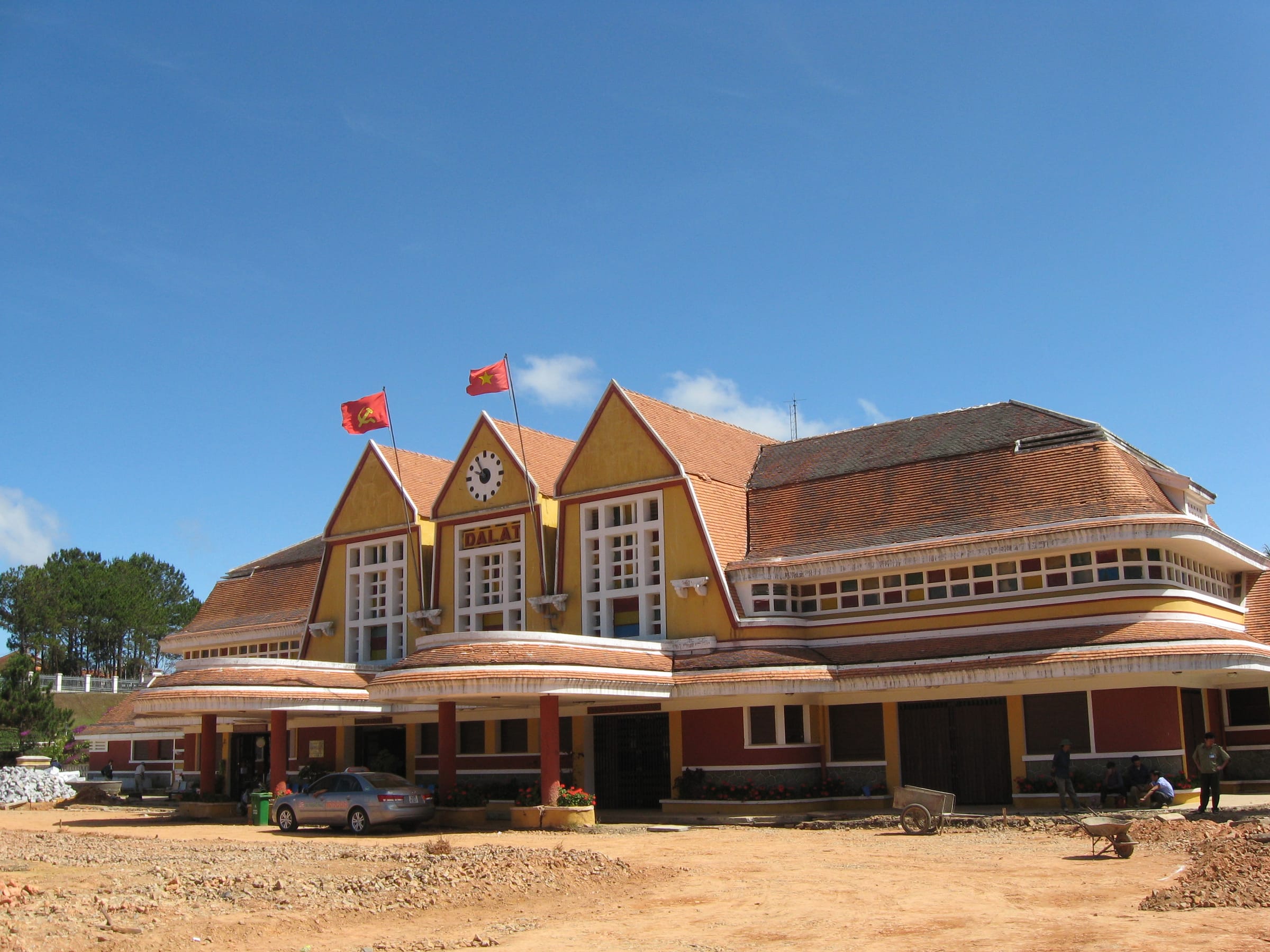
- The Dalat train station runs a heritage train to Trai Mat village; the ride is about thirty minutes each way and the station at Trai Mat has a view back toward the city.
- Strawberry picking at the farms near the city is marketed heavily; the farms closer to Cu Lan Village tend to be less packaged and more actual farm.
- Most cafes close by 10pm; if you're out late, the options near the central market stay open later than those on the lake circuit.
- Dalat wine is local and cheap; the red is sweet and often served cold, which is how it's meant to be drunk here.
- Bring more layers than you think you need. The temperature swings between afternoon and late evening are significant, and guesthouses don't always have adequate blankets.
- The flower market at the base of the central market steps is at its best between 5am and 7am, when wholesale buyers are there and retail hasn't started.