
Bagan for women travelling alone
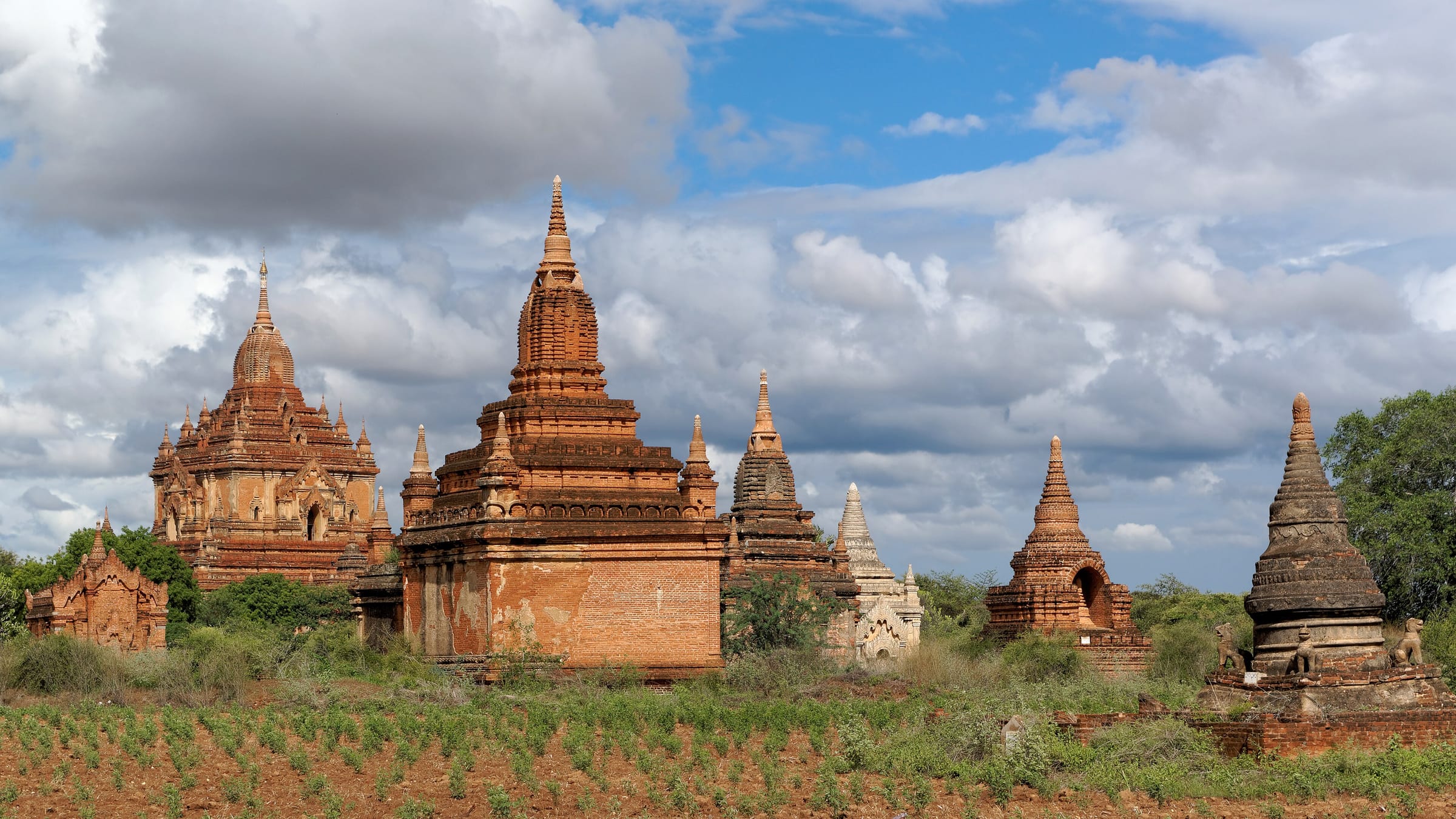
Over 2,000 temples on a flat plain you cross by e-bike
- Budget
- $30 a day
- On foot
- car needed
- Getting around
- minimal
- Best months
- November to February
- First solo trip
- expert
- Wifi
- poor
- English
- Moderate
- Places to stay
- 8+ read
01 of 10
The read
Women do this place regularly: two or three days on an e-bike, temples at dawn, a landscape unlike anywhere else.
What holds up
- E-bikes require no licence and are rented directly from your guesthouse, giving you full independence across the plain.
- The archaeological zone is a known solo destination; travellers report the area is quiet and unhurried.
- The social hostel scene in Nyaung-U makes it straightforward to meet other travellers if you want company.
What to weigh
- Myanmar carries active Level 4 travel advisories from several governments as of 2026; research your own country's guidance and check conditions before you go, not just before you book.
- Temple climbing rules change without notice, overland travel between cities involves military checkpoints, and ATMs are limited, so carry USD in crisp post-2010 notes as a backup.
Bagan is one of those places that stops you mid-step. Over 2,000 temples spread across a dusty plain, and most days you will have entire compounds to yourself. Rent an e-bike from Old Bagan and spend mornings exploring before the heat hits. The roads are flat and easy to navigate solo.
Accommodation clusters around three areas: Old Bagan (closest to temples, priciest), New Bagan (mid-range, more restaurants), and Nyaung-U (budget guesthouses, local market). A decent private room is easy to find. Food is simple: teashop curries, and cold beer at the end of the day.
Connectivity is limited. Wi-Fi works in hotels but drops frequently, and mobile data can be patchy outside town centers. Bring cash in clean USD bills to exchange, as ATMs exist but sometimes run empty. The political situation means some regions of Myanmar are restricted, but Bagan itself remains accessible to tourists. Locals are genuinely warm and will point you back to the road if you get turned around.
02 of 10
Who this suits
Bagan suits travellers who are comfortable with independent movement, heat management, and a destination that has very little nightlife. It rewards people who can wake before dawn, tolerate dust, and find meaning in spending hours alone on a bicycle in a landscape of ancient brick.
03 of 10
Common questions
What people ask about Bagan, answered with specifics rather than in general terms.
- Can I travel to Myanmar right now?
- Many governments have advisories recommending against non-essential travel to Myanmar due to the political situation since 2021. Check your government's current advisory before booking. Some travellers continue to visit; conditions vary by region and can change.
- Do I need to book temples in advance?
- No advance booking for temples. You pay the archaeological zone entrance fee at the checkpoint and then move freely. The hot air balloons are the only Bagan experience that requires advance booking.
- What currency should I bring?
- Myanmar kyat is the local currency. ATMs in Nyaung-U exist but are inconsistent with foreign cards and sometimes run low on cash. Bring USD in clean, unmarked bills as a backup; some hotels and larger restaurants accept USD directly.
- Is it easy to get around Bagan without a driver?
- Yes. E-bikes are available for daily rental throughout Nyaung-U and New Bagan. The plain is flat and the roads between temples are manageable. Most solo travellers prefer e-bikes over hiring a driver for temple exploration.
- How many days do I need in Bagan?
- Three days is the common answer and it works. One day for the central zone temples, one day for the more remote southern and northern temples, and one morning for a balloon flight or a slower sunrise. Four days allows you to add a Mount Popa trip.
- What should I wear in Bagan?
- Shoulders and knees covered at all temples, which is most of what you will be doing. Lightweight, loose, light-colored clothing handles the heat better than anything fitted or dark. Closed-toe shoes or sandals with straps are better than flip-flops on uneven temple floors.
04 of 10
Where to stay
Each of these has been read rather than listed. The full set is on the stays page.
- Bagan Thande Hotel
Located directly on the Irrawaddy River with unobstructed water views.
hotel · 4.2 from 586 reviews - Bagan Thiripyitsaya Sanctuary Resort
Resort spread across garden grounds with an open-air restaurant, pool.
hotel · 4.3 from 545 reviews - Aureum Palace Hotel & Resort Baganhotel · 4.3 from 399 reviews
- The Hotel @ Tharabar Gate
Rooms and suites with two restaurants, a poolside bar and spa treatments, in New Bagan.
hotel · 4.3 from 378 reviews - Heritage Bagan Hotel
Old Bagan address with a rooftop bar, restaurant, outdoor pool, gym and spa.
hotel · 4.3 from 252 reviews - BaobaBed Hostel BaganWomen only
A separate dorm is available for guests arriving early or departing late.
hostel · 4.3 from 192 reviews - Bagan Lodge
Staff responded to an after-hours breakdown on a remote road in under 20 minutes.
hotel · 4.4 from 190 reviews · about $222 a night - Bagan Cottage Boutique Hotelhotel · 4.8 from 58 reviews · about $56 a night
05 of 10
What to know
- 01
Temple dress code
Shoulders and knees must be covered at all temples. Shoes and socks come off at every temple entrance. The ground can be scorching hot midday and rough on bare feet. Carry a longyi (sarong) and be prepared for hot stone and dirt floors.
- 02
Temple climbing restrictions change
Myanmar authorities have progressively restricted which temples can be climbed for sunrise and sunset. Rules change frequently. Ask your guesthouse for the current situation on the day you arrive. Designated viewing mounds have been built as alternatives.
- 03
The plain is remote
Between temples, it is open scrubland with little shade, no shops, and no people. Carry water, sun protection, and a charged phone. E-bike breakdowns happen. If your e-bike dies, you may need to walk to the nearest road and flag down another traveller.
- 04
Lacquerware is the local craft
Bagan is Myanmar's lacquerware centre. Workshops in and around New Bagan demonstrate the multi-week layering process. Buying directly from workshops supports local artisans. Quality varies significantly from tourist stalls.
06 of 10
Getting around
- 01
E-bikes are the standard
Electric scooters (called e-bikes locally) are the primary way to explore the temple zone. Rentals are available from guesthouses and shops in all three areas. No license required. Top speed is about 45 km/h. Charge lasts a full day of temple hopping.
- 02
Horse carts for a traditional experience
Horse-drawn carts with a driver who knows the temples can be hired for half or full days. They move slowly but reach temples that bikes cannot. Popular for sunrise and sunset tours.
- 03
Walking is limited to temple clusters
Some temple clusters (especially around Ananda Temple) are walkable. But the archaeological zone is too spread out for walking as a primary transport. Distances between major temples can be several kilometres.
- 04
Getting to Bagan
Flights from Yangon and Mandalay land at Nyaung-U Airport. Overnight buses from Yangon take about 10 hours. The Irrawaddy river boat from Mandalay is a scenic full-day journey. VIP buses are significantly more comfortable than standard.
07 of 10
How the day runs
Sunrise at the temples is the defining Bagan experience. Hot air balloons drift over the plains from November through March. After sunrise, exploring temples by e-bike while the light is good and the heat is manageable. Nyaung-U Market is the local morning market for food and supplies.
The most famous sunrise temples are crowded. Ask your guesthouse for current recommendations on which temples allow access.
Midday heat (especially March-May) makes temple exploration uncomfortable. Retreat to accommodation, visit the Bagan Archaeological Museum, or explore temples with interiors (shade). Late afternoon (after 3pm) is better for resuming exploration. The Irrawaddy River area provides some breeze.
Carry water. The plain is dusty and shade is limited between temples.
Sunset viewing from designated viewpoints or a boat on the Irrawaddy. New Bagan has the most restaurant options. Nyaung-U has a few restaurants and a night market. Old Bagan has upscale hotels with restaurants. The area gets very quiet after dark.
Bagan is not a nightlife destination. Evenings are for dinner and early rest before sunrise.
08 of 10
What to eat
- 01
Mohinga
The same fish noodle soup that runs Myanmar, but Bagan's version tends to be slightly thicker and comes with more crispy bean fritters.
Morning stalls in Nyaung-U Market. Pull up a plastic stool before 8am.
- 02
Burmese Curry
Oil-based meat curry (chicken, pork, or mutton) served with a spread of sides: soup, vegetables, dips, and unlimited rice.
San Thi Dar restaurant in Old Bagan. A full curry spread with river views.
- 03
Htamin Jin
Rice kneaded with turmeric and oil, shaped into balls, and served with a side of fried fish or meat. A central Myanmar snack.
Local teahouses and market stalls in Nyaung-U.
09 of 10
Neighbourhoods
- 01
Nyaung-U
The main town and most practical base, with the airport, the central market, and the highest concentration of guesthouses and restaurants along its main road. Street lighting exists on the central strip, there are restaurants open until 9 or 10pm, and the road to Shwezigon Pagoda is walkable with foot traffic most of the day.
Best for First-timers who want easy access to food, transport, and ATMs without hiring a driver for every errand. - 02
Old Bagan
The archaeological zone itself, where the highest concentration of major temples sits. Accommodation here is limited and on the higher end after the government relocated residents decades ago.
Best for Travellers who want to wake up directly beside Ananda Temple and Thatbyinnyu with no commute. - 03
New Bagan
A planned town south of the archaeological zone, built when residents were displaced from Old Bagan. It has guesthouses, a few restaurants, and a quieter pace than Nyaung-U.
Best for Travellers wanting a slower base closer to southern temples like Dhammayazika Pagoda. - 04
Popa Mountain (day trip)
Mount Popa rises about 50 kilometres southeast of Bagan and is home to a nat spirit shrine perched on a volcanic plug called Taung Kalat. The climb involves hundreds of steps past monkeys and vendors.
Best for Travellers with a full day and interest in Burmese animist religious tradition beyond Buddhism. - 05
Riverside (Ayeyarwady)
The bank of the Ayeyarwady River runs along the western edge of Old Bagan and New Bagan. There are a few sunset-facing restaurants and the boat dock for day trips to Pakokku.
Best for Sunset dinners and early morning river views before the heat sets in.
10 of 10
Local knowledge
The operational detail that is obvious once you are there and impossible to guess before.
- The Archaeological Zone entrance fee is paid at a checkpoint; keep the receipt because it is sometimes checked again at individual temples.
- E-bike batteries can die mid-plain. Ask the rental shop about range before you head far south toward Dhammayazika.
- Pagan lacquerware workshops near New Bagan let you watch the process without a sales pitch if you walk in during working hours rather than peak tourist time.
- ATMs in Nyaung-U sometimes run out of cash or decline foreign cards. Carry more kyat than you think you need after arriving.
- The shared minibus to Mandalay takes around five hours and departs from the Nyaung-U bus station in the early morning; book through your guesthouse the night before.
- Temple interiors can be unexpectedly dark and the uneven brick is easy to trip on; a small torch is more useful than it sounds.
- Dress covering shoulders and knees is required at all temples. A longyi or lightweight linen trousers work better than shorts with a wrap because the wraps slip constantly.