
Maputo for women travelling alone
- On foot
- somewhat walkable
- Getting around
- Limited
- Wifi
- fair
- Places to stay
- 8+ read
01 of 08
The read
Women who come here leave talking about the food, the music, and a city that rewards those who arrive prepared.
What holds up
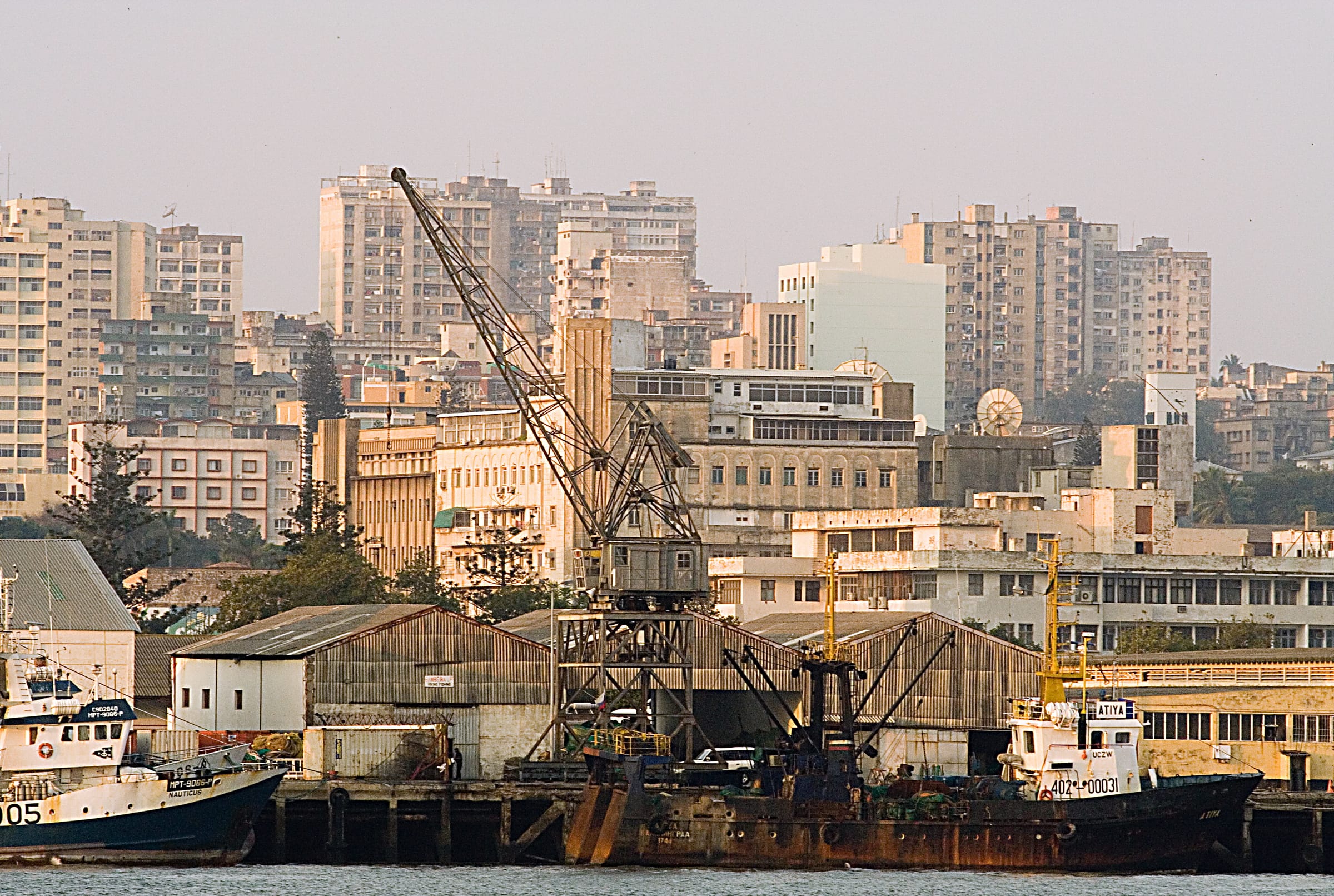
- The Baixa city centre is a flat, walkable grid you can cross in 15 minutes on foot.
- Yango and Bolt, app-based ride-hailing services, work in Maputo and let you book a car without negotiating a fare.
- In Polana and Sommerschield, restaurant staff generally speak English; elsewhere, a few words of Portuguese open every door.
What to weigh
- January and February bring cyclone-season rain, high humidity, and occasional disruption to beach areas: May to September is the far more comfortable window for walking the city.
- Maputo runs on Portuguese almost entirely outside tourist hotels, so downloading Google Translate's offline Portuguese pack before you land is a practical necessity.
02 of 08
Common questions
What people ask about Maputo, answered with specifics rather than in general terms.
- How do you get around Maputo?
- Walking in the Baixa. The city centre grid is walkable. From the Mercado Central to the waterfront is about 15 minutes. Avenida 25 de Setembro and Julius Nyerere are the main arteries. Pavements can be uneven.
- Where should you stay in Maputo on your own?
- Distances in Maputo are larger than they look on a map, so the area you pick matters more than the property.
03 of 08
Where to stay
Each of these has been read rather than listed. The full set is on the stays page.
- StayEasy Maputo
Women keep coming back for the beach position and the pool with its ocean view, with a mall directly below the hotel. The bar draws women of the night who approach guests, making the common areas ones most women quietly skip.
hotel · 4.4 from 861 reviews - Angel Guest House, Maputohomestay · 4.2 from 360 reviews
- Otia Hotelhotel · 4.1 from 345 reviews
- Palm Aparthotelhotel · 4.5 from 327 reviews
- Fatima's Backpackershostel · 3.5 from 227 reviews
- Stay Inn - Guest house
Polana address with 24 hour reception and most errands within walking distance.
hotel · 4.4 from 131 reviews - Lehani Beach Hostel, Tofo
Walking distance to the beach, with check-in from 2pm.
hostel · 4.9 from 101 reviews - CoWork Lab SUITES
A well-regarded restaurant, Magumano, is located a short distance down the street.
hotel · 4.4 from 37 reviews
04 of 08
What to know
- 01
Portuguese helps enormously
Maputo is Portuguese-speaking. English is limited outside tourist restaurants and hotels. Even basic Portuguese phrases make a significant difference. Google Translate works offline if you download the Portuguese pack.
- 02
The Fish Market is unmissable
Mercado do Peixe in the Baixa is where locals and visitors eat grilled prawns, crab, and fish at communal tables. Point at what you want, negotiate the quantity, and they grill it. Best for lunch.
- 03
Phone and valuables awareness
Keep belongings close in markets and on busy streets. Avoid displaying electronics unnecessarily, particularly around the Baixa and market areas. This is standard practise for locals too.
- 04
Capulanas are everywhere
These colourful printed wraps are Mozambique's signature fabric. The Mercado Central has the best selection. They double as a beach cover-up, bag, or headwrap. Buying one and wearing it connects you to local culture.
05 of 08
Getting around
- 01
Walking in the Baixa
The city centre grid is walkable. From the Mercado Central to the waterfront is about 15 minutes. Avenida 25 de Setembro and Julius Nyerere are the main arteries. Pavements can be uneven.
- 02
Tuk-tuks and taxis
Small three-wheeled tuk-tuks are everywhere and work for short trips. Negotiate the fare before getting in. Regular taxis are also available. There is no Uber in Maputo.
- 03
Chapas (minibuses)
The local minibus network covers the city but is crowded and confusing for newcomers. Not the most practical option for short visits.
- 04
Ferry to Catembe
A passenger ferry crosses Maputo Bay to Catembe in about 20 minutes. From Catembe, you can access the Machangulo Peninsula and southern beaches. The new Maputo-Catembe bridge (Africa's longest suspension bridge) also connects by road.
06 of 08
How the day runs
The Marginal fills with joggers and walkers from 6:00. Coffee at Cafe Continental or one of the spots along Avenida Julius Nyerere. The Mercado Central is busiest in the morning. Street vendors set up by 7:00. The Fish Market (Mercado do Peixe) opens early.
Morning is the best time to visit markets before the midday heat.
Long lunches are the norm, often extending past 14:00. The Feira de Artesanato craft market and FEIMA (Saturday art market at Praca dos Trabalhadores) are afternoon activities. The Natural History Museum and its elephant display is worth an hour. Heat peaks between 13:00-15:00.
Lunch at the Fish Market is a Maputo ritual. Point at what you want, it gets grilled fresh.
Maputo comes alive at night. Dinner rarely starts before 20:00. Live music at bars and clubs, particularly on weekends. Avenida Julius Nyerere has a strip of restaurants and bars. The Nucleo de Arte gallery hosts cultural events. Maputo stays up later than most African capitals.
The live music scene, especially marrabenta and Afro-jazz, is a genuine highlight.
07 of 08
What to eat
- 01
Peri-Peri Prawns
Giant Mozambican prawns grilled and drenched in a fiery peri-peri chili, garlic, and lemon butter sauce. The dish Maputo is famous for.
Restaurante Costa do Sol on the Marginal. A Maputo institution since 1935, right on the waterfront.
- 02
Matapa
Cassava leaves slow-cooked with ground peanuts, coconut milk, garlic, and crab or prawns. Rich, earthy, and deeply Mozambican.
Restaurante Zambi in the city centre, or Mundo's in Sommerschield for a casual version.
- 03
Xima
Thick maize porridge, Mozambique's staple starch. Eaten by hand, used to scoop up sauces and stews. Similar to South African pap.
Any local restaurant (cervejaria). It comes with most traditional meals as the default side.
08 of 08
Neighbourhoods
- 01
Baixa (Downtown)
Colonial city centre with the central market, street art, and Portuguese-era architecture
- 02
Polana
Leafy upscale neighbourhood with ocean views and Maputo's grand dame hotel