
Pai for women travelling alone
Three hours north of Chiang Mai, and walkable end to end in 15 minutes
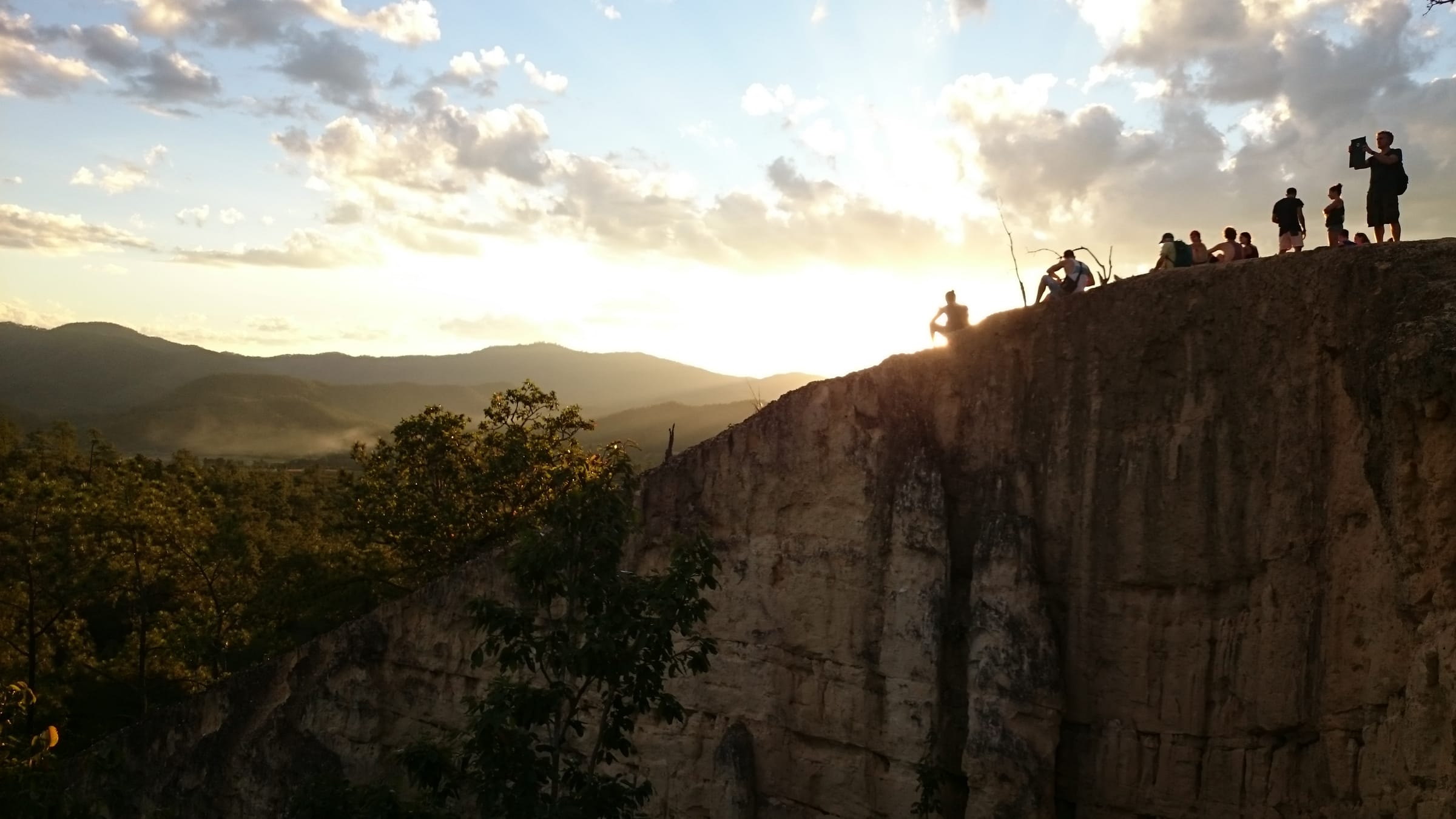
- Budget
- $20 a day
- On foot
- very walkable
- Getting around
- minimal
- Best months
- November to February
- First solo trip
- Good first trip
- Wifi
- fair
- English
- Moderate
- Places to stay
- 8+ read
01 of 09
The read
Pai rewards a woman who wants to slow down, and the tiny town makes it genuinely easy to feel at home fast.
What holds up
- The town centre is four walkable blocks, so you never need transport just to eat, drink, or meet people.
- Solo travellers are the norm here, not the exception, and familiar faces appear within a day.
- English is spoken well enough in guesthouses, cafes, and rental shops to handle every practical moment.
What to weigh
- The mountain road from Chiang Mai has 762 curves and motion sickness is common, so plan the trip before you arrive.
- Ride-hail apps do not operate in Pai, and a scooter is the only practical way to reach anything outside town.
Pai is a small mountain town about three hours north of Chiang Mai by minivan. The road winds, so take motion sickness tablets if you need them. The town centre is walkable in 15 minutes end to end. Most things you need are on or just off Walking Street.
Renting a scooter is standard here, but the roads outside town are hilly with sharp turns. If you are not confident on a motorbike, you can reach most attractions by hiring a driver for the day. Pai Canyon, the hot springs, and the viewpoints are all within a 15-minute ride.
The crowd is a mix of backpackers and long-stayers. Solo women are everywhere, especially in the cafes and yoga studios along the river. Accommodation is mostly bungalows with mountain views. The night market on Walking Street is small but has good food, and eating alone there is the norm rather than the exception.
02 of 09
Who this suits
Pai suits women who want to slow down for at least three days and are comfortable on a scooter or willing to rent a bicycle. It is less suited to women who want reliable infrastructure, fast Wi-Fi, or a city-size selection of restaurants.
03 of 09
Common questions
What people ask about Pai, answered with specifics rather than in general terms.
- How do I get from Chiang Mai to Pai?
- Minivans run several times daily from Chiang Phueak bus terminal in Chiang Mai. The ride takes about three hours depending on the driver. There is also a public bus from Arcade bus terminal that takes longer but is less winding. Book minivan tickets through your guesthouse or at the terminal the day before.
- Do I need to rent a scooter?
- The town centre is walkable. But the hot springs, canyon, waterfall, and most of the scenery that makes Pai worth visiting are several kilometres out. A bicycle works if the heat is manageable. A scooter opens up the whole valley. Most rental shops will ask for your passport as a deposit.
- How long should I stay in Pai?
- Three days is enough to see the main landmarks and settle in. Four or five days is the sweet spot if you want to slow down and explore side roads. More than a week and the small-town loop starts to repeat.
- What should I know about the road from Chiang Mai?
- The mountain road is the most motion-sickness-inducing road in Thailand, according to most drivers who use it regularly. Sit in the front seat of the minivan if available. Keep the window cracked. Ginger candy or standard motion sickness tablets help significantly.
- Is it easy to meet other travellers in Pai?
- Yes. The town draws a disproportionate number of solo travellers. Hostel common areas, the walking street night market, and the handful of small bars near the river all function as natural meeting points. It is one of the easier places in Thailand to fall into conversation.
- What should I pack for Pai?
- Warm layers for evenings in the cool season (November to February), when temperatures drop to around 10 to 15 degrees Celsius at night. Sunscreen for scooter days. A rain jacket if you are visiting during the wet months. Mosquito repellent for evenings near the river and waterfalls.
04 of 09
Where to stay
Each of these has been read rather than listed. The full set is on the stays page.
- Chali's Family Hotel & Hostel
Dorms with curtains and lockers, outdoor pool, six minute walk from the Night Market.
hostel · 4.6 from 3842 reviews · about $280 a night - Pai Village Boutique Resort
The resort is within walking distance of the night market.
hotel · 4.8 from 803 reviews · about $80 a night - Revolution Hostel Pai Riverside
Organizes jungle tubing activities as part of the hostel experience.
hostel · 4.5 from 730 reviews - Reverie Siam
Women keep coming back for the adults-only pool and the fact that this place sits apart from Pai's noise, by the river. The shuttle into town means you are not walking back alone in the dark. Rooms are large and genuinely clean.
hotel · 4.8 from 691 reviews · about $206 a night - Circus HostelWomen only
Female-only dorms and organised activities, on Walking Street, check in from 2pm.
hostel · 4.0 from 613 reviews - Happy House Backpackers
Family-run rooms and dorms on Walking Street, with a bar, restaurant and lounge.
hotel · 4.6 from 196 reviews - Mad Monkey Pai
Located 10 minutes' walk from Pai's town centre.
hotel · 4.6 from 171 reviews - Butterfly Hostel, Pai
Breakfast buffet daily, free dinner on Wednesdays, five minutes from Walking Street.
hostel · 4.8 from 139 reviews
05 of 09
What to know
- 01
762 curves is not an exaggeration
The road from Chiang Mai to Pai is genuinely winding. Motion sickness pills are sold at Chiang Mai bus station for a reason. Sit in the front of the minivan. Some people fly Chiang Mai to Pai on a small plane to avoid it.
- 02
Everyone knows everyone
Pai is tiny. After one day you'll recognize regulars at the cafes and bars. This is comfortable for solo travellers because familiar faces appear quickly. It also means the bartender remembers what you ordered last night.
- 03
It gets cold at night in cool season
November to February, nighttime temperatures drop to 10-15 degrees Celsius. Most guesthouses have blankets but not heating. Bring a warm layer. Daytime is warm.
- 04
The walking street market is the social centre
Every evening from about 5pm, the walking street fills with food vendors and travellers. If you're alone and want to meet people, this is where it happens. Grab food, sit on the steps, and conversations start.
06 of 09
Getting around
- 01
Scooter is standard
Most attractions are 5-20 minutes outside town by scooter. Rental places are on every block. The roads to viewpoints and waterfalls are paved but can be steep. The main valley roads are flat and easy.
- 02
Walking in town
The town centre is four blocks. Everything from restaurants to bars to ATMs is walkable. Most guesthouses are within 5-10 minutes of the centre on foot.
- 03
No Grab
Ride-hail apps don't operate in Pai. Transport is scooter, bicycle, or walking.
- 04
The road from Chiang Mai
The 3-hour minivan ride from Chiang Mai has 762 curves through mountains. Motion sickness is common. Take medication beforehand if you're prone. The views are stunning.
07 of 09
How the day runs
Cafes, hot springs, viewpoints
Pai mornings are cool, especially November to February. The walking street has cafes open by 7am. Pai Canyon and the viewpoints are best in morning light. The Tha Pai hot springs are quieter before noon.
Waterfalls, tubing, exploring
Pam Bok Waterfall and Mo Paeng Waterfall are popular afternoon swims. Bamboo rafting on the Pai River runs in the afternoon. The Land Split and Pai Canyon are quick stops on a scooter loop.
Walking street, bars, live music
The walking street night market opens around 5pm with food stalls, smoothies, and crafts. A handful of bars along the main street have live music. The jazz bar is a Pai institution. Everything is done by midnight.
08 of 09
Neighbourhoods
- 01
Walking Street Area
The dense centre of town along Chaisongkhram Road. Lit at night, with guesthouses, restaurants, and small bars within a few blocks of each other.
Best for First-timers who want to be close to everything and can walk to most of what they need. - 02
Pai River Corner
The eastern edge of the centre where Pai River bends. Quieter than the walking street, with wooden guesthouses that sit over or next to the water.
Best for Women who want proximity to town but prefer to hear the river over the bars. - 03
East of Pai (Wiang Tai area)
Past the bridge, away from the tourist centre. Thai-owned guesthouses, morning markets, and fewer backpackers. The road is paved and pavements are minimal but foot traffic is consistent during daylight.
Best for Repeat visitors who want a slower, more local rhythm. - 04
North Pai / Santichon area
A few kilometres north of town toward the Chinese Yunnanese village of Santichon. Rice fields, farm guesthouses, and long sunrise views. Roads are paved and mostly flat.
Best for Women who want a guesthouse with a rice paddy out the window and quiet mornings. - 05
Pambok / Hot Springs side
Southeast of town, closer to the Tha Pai Hot Springs. A handful of small resorts set in greenery, away from the night market noise.
Best for Women who want a resort-style setting without leaving the valley.
09 of 09
Local knowledge
The operational detail that is obvious once you are there and impossible to guess before.
- The 762 curves on the minivan from Chiang Mai are not a marketing myth. Take motion sickness tablets the night before if you are prone.
- Most guesthouses will store luggage if you want to take a day trip without your bag.
- ATMs in Pai charge foreign transaction fees. Withdraw enough from Chiang Mai to last your stay.
- The night market only runs Thursday to Sunday. Monday to Wednesday, most food stalls on the walking street still open, just fewer of them.
- Scooter rental shops will often give you a helmet that does not fit properly. Ask for a different one. There are usually extras in the back.
- Cell service is fine in town on AIS and DTAC but drops out on valley roads and disappears on the route to Mo Paeng.
- The minivan back to Chiang Mai books up fast on Sunday afternoons. Buy your ticket the morning before you plan to leave.