
Bangkok for women travelling alone
Temples, rooftops, and 24-hour street food
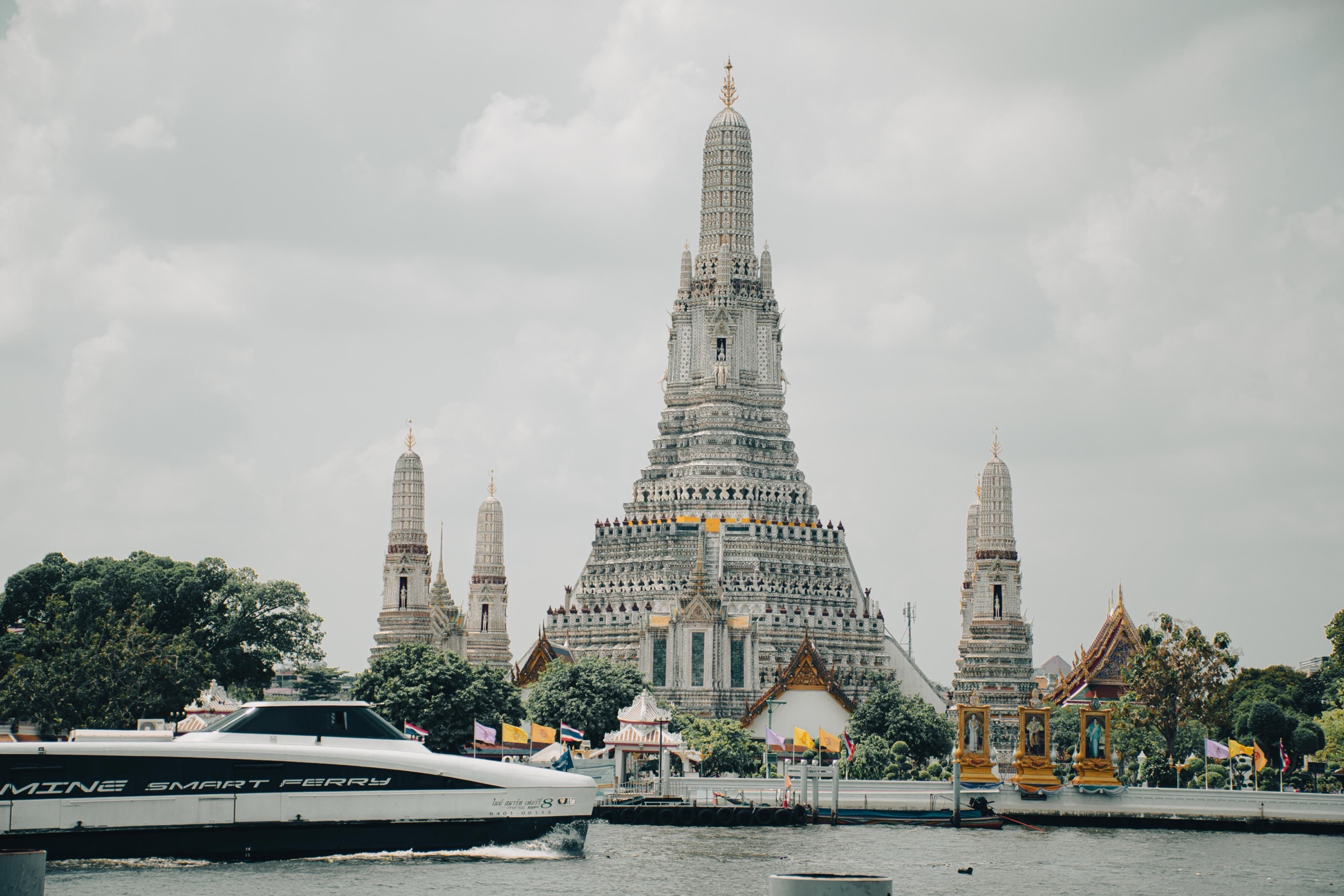
- Budget
- $30 a day
- On foot
- somewhat walkable
- Getting around
- Excellent
- Best months
- November to February
- First solo trip
- Good first trip
- Wifi
- Good
- English
- Moderate
- Places to stay
- 8+ read
01 of 10
The read
Bangkok hands a solo woman a first-class transit system and a food culture that makes eating alone a pleasure.
What holds up
- The BTS Skytrain elevated rail and MRT underground metro cover virtually every area travellers use, with signs in English throughout.
- Grab, the region's dominant ride-hailing app, shows the fare upfront and tracks the ride, making anywhere off the train lines easy to reach.
- Thai food culture means solo diners are at home at every level, from street stalls to counter-seating restaurants.
What to weigh
- Air quality can be poor December to February; if you are sensitive, watch local forecasts and carry a mask.
- Khao San Road and the Old City have no BTS or MRT access, so getting back late means a Grab or a metered taxi with the meter running.
Bangkok runs on convenience. BTS and MRT cover the central areas, Grab is reliable around the clock, and 7-Elevens with ATMs are on every block. Most solo women base themselves in Silom, Sukhumvit, or the Old Town area around Khao San, and the three feel quite different.
Street food is part of daily life here. Eating alone at a street stall or market is completely normal and nobody will notice. The city has a large community of long-term solo women, especially around co-working spaces in Ari and Ekkamai.
Walking alone at night is generally comfortable in the main tourist and business districts. The main thing to watch here is the traffic. Grab rather than street taxis is the standard move for getting around after dark.
02 of 10
Who this suits
Bangkok works well for women who want a city with real infrastructure: apps that function, public transport that connects, hospitals and pharmacies in most neighbourhoods. It rewards those willing to eat at street stalls and figure out ferry routes, but it doesn't require it.
03 of 10
Common questions
What people ask about Bangkok, answered with specifics rather than in general terms.
- How do I get from Suvarnabhumi Airport to central Bangkok?
- The Airport Rail Link runs from the airport basement to Phaya Thai BTS station in about 30 minutes. From there you can connect to the BTS network. A Grab from the airport to Sukhumvit takes 45-75 minutes depending on traffic and costs significantly more than the train. Use the official Grab pickup zone at the airport rather than accepting offers from drivers inside the terminal.
- Is it easy to eat alone in Bangkok?
- Yes. Street food culture here is built around individual portions eaten quickly. Sit-down restaurants are accustomed to solo diners, and no one will seat you at a table for four if there's a smaller option. Counter seating at street stalls and small restaurants is common.
- Do I need to speak Thai to get around?
- In tourist areas and on app-based transport, English works. For street food stalls, pointing at what others are eating works fine. Google Translate's camera function is useful for menus with no English text. Learning to say 'thank you' (khob khun kha, for women) is noticed and appreciated.
- What should I know about tuk-tuks?
- Tuk-tuks are not metered. Always agree on a price before you get in. They're a reasonable option for short trips in the old city, but for anything longer, Grab is more predictable on price. Avoid any tuk-tuk driver who offers a very cheap ride and suggests stopping at a tailor or gem shop along the way.
- What do I need to know about dress codes?
- Temple visits require covered shoulders and knees. This applies to both the Grand Palace complex and Wat Pho. Lightweight long trousers and a loose shirt pack small and handle most situations. Sarongs are available to borrow at major temple entrances if you arrive underprepared.
- Can I use contactless payment or do I need cash?
- Cash is still standard for street food, markets, and smaller restaurants. Larger restaurants, hotels, and 7-Elevens take cards. ATMs are widely available but usually charge a foreign transaction fee on top of whatever your bank charges. Withdraw a useful amount in one go rather than multiple small withdrawals.
04 of 10
Where to stay
Each of these has been read rather than listed. The full set is on the stays page.
- Hotel Muse Bangkok, Autograph Collectionhotel · 4.5 from 3251 reviews
- Mad Monkey Bangkok
Located on Thanon Phra Sumen in the old quarter near Khao San Road area.
hotel · 4.5 from 2803 reviews - Bangkok Tree Househotel · 4.0 from 1445 reviews · about $112 a night
- Dusit Thani Bangkok
Opposite Lumpini Park in Silom, with a rooftop pool, spa and several restaurants.
hotel · 4.7 from 835 reviews · about $3500 a night - NapPark HostelWomen only
The female-only dorms have pod-style bunks with curtains, so you're not just sleeping in a room with strangers. Reviews flag nothing that gives pause, though the Khao San Road proximity means noise is part of the deal.
hostel · 4.4 from 647 reviews - Smile Society Boutique Hostel
The Old Town location puts guests within walking distance of temples and street food stalls.
hostel · 4.4 from 137 reviews · about $250 a night - Baan Manusarn
The location is away from the Khao San Road area while still being centrally placed.
homestay · 4.3 from 30 reviews · about $50 a night - Lub d Bangkok SilomWomen only
Women-only dorms and 24-hour reception are the reasons women come back here. BTS Surasak is close enough that a late return is never a problem.
hostel
05 of 10
What to know
- 01
Solo dining is completely normal
Thai food culture revolves around eating. Solo diners are common at every level from street stalls to restaurants. Point-and-order at food courts in malls if language is a barrier.
- 02
Temples enforce dress codes
The Grand Palace and Wat Pho require covered shoulders and knees. They lend wraps at the entrance but the queue wastes time. Carry your own.
- 03
Metered taxis vs. flat rate
Always ask for the meter in metered taxis. Some drivers at tourist spots quote flat rates that are 3-4x higher. If they refuse the meter, get the next one. Grab avoids this entirely.
- 04
Khao San Road is optional
Many solo women skip Khao San entirely. The backpacker party scene there is its own world. The Old City around it has excellent temples and food without the noise.
- 05
7-Eleven is genuinely useful
The 7-Elevens on every corner have SIM cards, snacks, drinks, toiletries, and cash withdrawal. They're air-conditioned rest stops. Most accept cards.
06 of 10
Getting around
- 01
BTS and MRT are the backbone
The Skytrain (BTS) and subway (MRT) cover Sukhumvit, Silom, Siam, Chatuchak, and Chinatown. Get a Rabbit card for BTS or use contactless payment on MRT. Both run from 5:30am to midnight.
- 02
Grab for everything else
Grab is reliable for cars and motorbikes. Use it for anything off the train lines. Traffic can double travel times during rush hour (7-9am, 5-8pm). Motorbike taxis cut through traffic.
- 03
Canal boats are a shortcut
The Saen Saep canal boat runs east-west through the city. It's fast, regular, and connects Pratunam to the Old City. Hold your bag close and watch the splash when boarding.
- 04
Walking is block by block
Some neighbourhoods are very walkable (Silom, parts of Sukhumvit). Others have broken pavements occupied by food carts. Bangkok is a city where you combine transport modes constantly.
07 of 10
How the day runs
Temples, markets, street food
Temple visits are best before 10am. The Grand Palace opens at 8:30am and gets crowded fast. Street food vendors in Chinatown and the Old City start early. Canal boats begin running at 5:30am.
Malls, cafes, massage, markets
Bangkok malls are social hubs, not just shopping. Siam area has massive AC malls that double as lunch spots. The Chatuchak Weekend Market runs all afternoon. Thai massage shops are everywhere.
Rooftops, night markets, Khao San
Rooftop bars are a Bangkok institution. Jodd Fairs and Rot Fai night markets open around 5pm. Khao San Road peaks from 9pm onward. Street food along Yaowarat (Chinatown) is best after dark.
08 of 10
What to eat
- 01
Pad Kra Pao
Holy basil stir-fry with minced pork over rice, topped with a crispy fried egg. The real deal is smoky from high-heat wok cooking.
Any street stall with a single-burner wok setup. Look for places where locals queue.
- 02
Som Tum
Green papaya salad pounded to order in a clay mortar. Crunchy, sour, salty, and as spicy as you dare.
Isaan-style restaurants and street vendors, especially around Khao San and Chatuchak.
- 03
Khao Soi
Northern-style coconut curry noodles with crispy egg noodle topping and pickled mustard greens on the side.
Khao Soi Mae Sai in Pratunam, or any northern Thai restaurant.
- 04
Mango Sticky Rice
Ripe yellow mango with coconut-cream sticky rice and a drizzle of sweet coconut sauce. Best during mango season (April-June).
Mae Varee near BTS Thong Lo, or any fresh fruit vendor during season.
- 05
Boat Noodles
Intensely flavoured pork or beef broth noodles served in small bowls. Rich, dark, aromatic. Order several.
Victory Monument boat noodle alley, or Saew Noodle along Sukhumvit.
09 of 10
Neighbourhoods
- 01
Silom
Bangkok's financial district by day, with a dense grid of streets that stay active into the night. Silom Road has BTS access at Sala Daeng and Chong Nonsi, well-lit pavements, and a concentration of restaurants, pharmacies, and convenience stores.
Best for Women who want MRT and BTS access from the same base, with good restaurant options within walking distance. - 02
Sukhumvit
A long corridor running east from Asok station, with side streets (sois) that each have their own character. Lower-numbered sois like Soi 11 and Soi 13 have heavy foot traffic and international restaurants; higher-numbered ones like Soi 49 get quieter and more residential.
Best for First-timers who want BTS access, international food options, and pharmacies and clinics within reach. - 03
Thonglor and Ekkamai
These two adjacent BTS stops have become Bangkok's most concentrated neighbourhood for independent cafes, Japanese restaurants, and wine bars. Pavements are less consistent here than in Silom, but foot traffic is high on weekends and the streets are well-lit.
Best for Women who want to eat and drink well without the tourist density of Sukhumvit's lower sois. - 04
Rattanakosin (Old City)
The historic core around Wat Phra Kaew and Wat Pho, with narrow lanes, tuk-tuks, and the Chao Phraya riverfront. It's primarily a daytime neighbourhood; most guesthouses here are small and the area quiets significantly after 8pm.
Best for Temple visits, river ferry use, and anyone who wants to be close to the main historical sites on foot. - 05
Ari
A residential neighbourhood just north of the main tourist belt, one BTS stop from Mo Chit. Ari has tree-lined streets, independent coffee shops, and a local market at the BTS exit that runs most mornings.
Best for Women who want a quieter base with a neighbourhood feel and BTS access to the rest of the city.
10 of 10
Local knowledge
The operational detail that is obvious once you are there and impossible to guess before.
- 7-Eleven sells SIM cards; True Move and AIS both work well in the city and activate in minutes.
- Temple dress codes are strict at Wat Phra Kaew; shoulders and knees must be covered or you'll be turned away at the gate.
- The BTS app shows real-time train arrivals and lets you top up a Rabbit card balance without the ticket queue.
- Pharmacy chains like Boots and Watsons carry most things you'd find at home; prescription medication is available over the counter for many common drugs.
- Grab shows surge pricing clearly before you confirm; if it's high, close the app and reopen after a few minutes.
- Metered taxis are legally required to use the meter; if a driver refuses, get out and take the next one.
- The sky bridge connecting BTS stations in the Siam and Silom areas means you can walk significant distances without touching the street during rain.