
Busan for women travelling alone
Beaches and seafood markets, with a subway between them
- On foot
- Walkable
- Getting around
- Excellent
- Wifi
- Excellent
- Places to stay
- 8+ read
01 of 08
The read
Women move through Busan alone with ease, drawn by the coast, the food markets, and a metro that goes almost everywhere.
What holds up
- Four metro lines with English signage and announcements connect all the main areas; most tourist spots sit within a five-minute walk of a station.
- Naver Map, downloaded before you arrive and set to English, gives bus and metro timings accurate to the minute.
- Solo women are a regular presence in Seomyeon, the beach areas, and Jagalchi Market; the city is well practised at receiving travellers alone.
What to weigh
- Haeundae and Gwangalli beaches are extremely crowded in July and August; typhoon disruptions are possible in August and September.
- Kakao T, Korea's main taxi app, requires a Korean phone number to fully activate; pick up a local SIM or eSIM at the airport on arrival so all the transport apps work from day one.
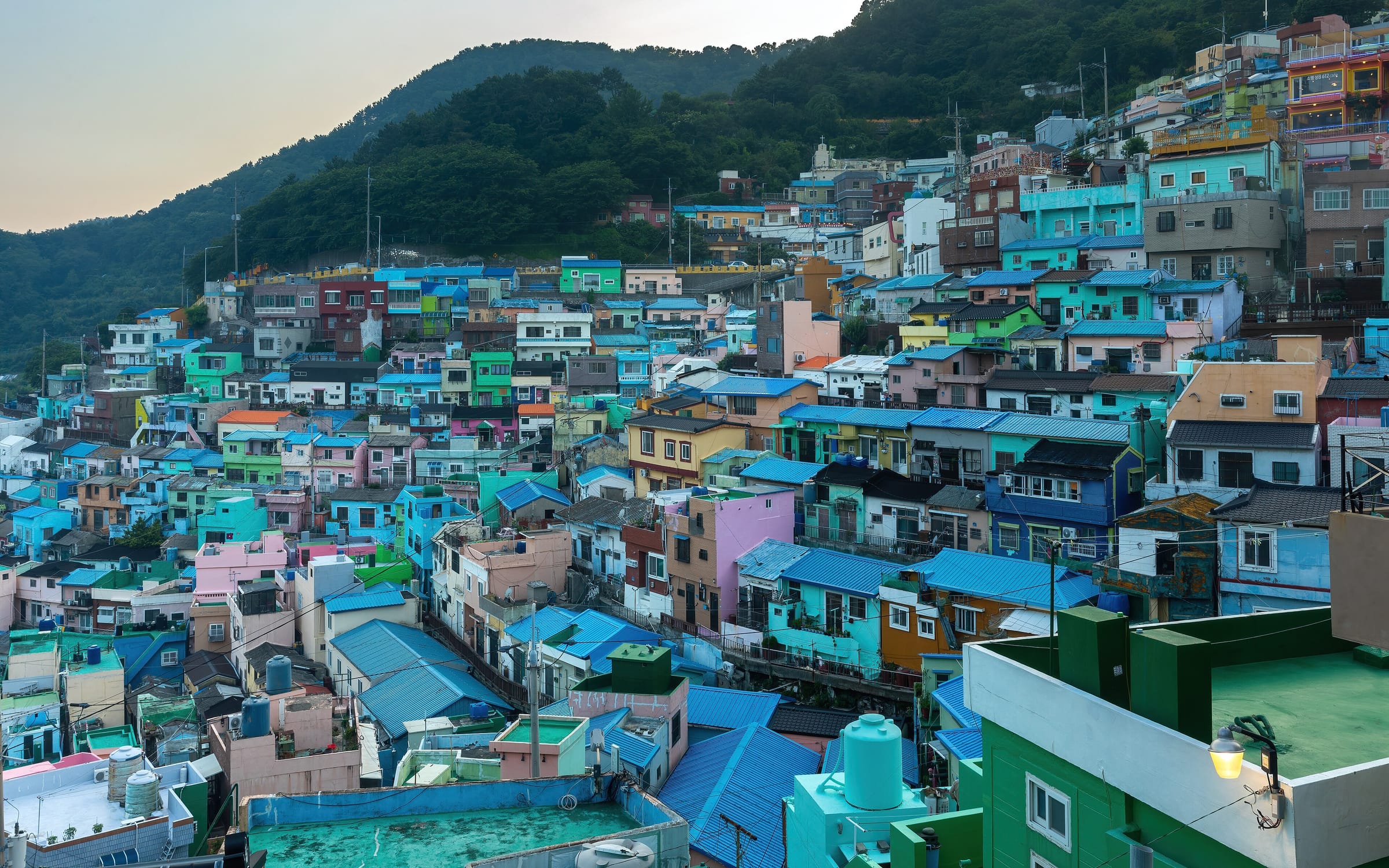
Busan is Seoul's coastal counterpart: beach culture, incredible seafood, and a more laid-back energy. Haeundae Beach and Gwangalli Beach are the main draws, with the latter offering night views of the illuminated Gwangan Bridge. The Gamcheon Culture Village (a hillside neighbourhood painted in bright colors) is photogenic but steep. Wear good shoes.
Jagalchi Fish Market is the largest seafood market in Korea, and eating alone there is standard. Point at what looks good, and it will be prepared for you on the spot. A plate of fresh sashimi with sides is a standard solo meal. The market has a dedicated floor for sit-down eating, so you are never awkward about being alone. For street food, the BIFF Square area in Nampo-dong has stalls selling hotteok and eomuk skewers.
The metro has 6 lines and covers all major areas. A day pass covers the subway. Stay near Seomyeon for central access, or Haeundae for the beach. Hotels are cheaper here than in Seoul. Busan is orderly, and the coastal temple of Haedong Yonggungsa sits right on the rocks. The KTX train connects Busan to Seoul in 2.5 hours, making it an easy addition to any Korea itinerary.
02 of 08
Common questions
What people ask about Busan, answered with specifics rather than in general terms.
- How do you get around Busan?
- Metro covers the main areas. Four metro lines connect Haeundae, Seomyeon, Nampo, and Busan Station. Trains run every 5-8 minutes. T-money card works on metro and buses. Most tourist areas are within a 5-minute walk of a station.
- Where should you stay in Busan on your own?
- The centre of Busan is compact enough to walk, so the area you pick matters more than the property. Beaches and seafood markets, with a subway between them
03 of 08
Where to stay
Each of these has been read rather than listed. The full set is on the stays page.
- Ananti at Busan Covehotel · 4.5 from 9957 reviews
- Ananti at Busan Villagehomestay · 4.8 from 1008 reviews
- BMC Busan Youth Hostel ARPINAhostel · 4.0 from 882 reviews
- Citadines Connect Hari Busan
Located away from main tourist areas in Yeongdo-gu district.
hotel · 4.5 from 187 reviews - Busan Popcorn Hostelhostel · 4.0 from 179 reviews
- Nomad Live HostelWomen only
The female capsule dorms have enough room for bags, clothes, and essentials without feeling cramped. Free breakfast and a coworking space do the social heavy lifting for anyone working remotely. Reviews say little about late-night staff cover, so confirm that before a late arrival.
hostel · 4.8 from 156 reviews · about $32 a night - TraveLight
Mixed and female-only dorms in Seomyeon, with a shared kitchen and dining area.
hotel · 4.6 from 115 reviews - Bexco Hostel B&B
Located near the beach in Suyeong-gu district.
hostel · 4.3 from 83 reviews
04 of 08
What to know
- 01
Jimjilbangs are a solo essential
Korean bathhouses (jimjilbang) have gender-separated bathing areas and mixed common rooms with heated floors, saunas, and snack bars. Spa Land in Centum City is the most popular in Busan. They are completely normal to visit alone and many locals go solo.
- 02
Seomyeon is the social hub
The underground shopping area and surrounding streets have the highest concentration of restaurants, bars, and shops. It is where most of Busan's younger crowd goes out. The area stays active until late.
- 03
Beach culture is seasonal
Haeundae and Gwangalli beaches are packed in July-August and much quieter outside summer. The official swimming season runs June through August with lifeguards. Outside that window, beaches are for walking and sunset watching.
- 04
Accommodation clusters matter
Haeundae is beach-focused and spread out. Seomyeon is central with the best transit connections. Nampo/BIFF area is good for Jagalchi Market and Gamcheon access. Most hostels with social common areas are in Haeundae or Seomyeon.
05 of 08
Getting around
- 01
Metro covers the main areas
Four metro lines connect Haeundae, Seomyeon, Nampo, and Busan Station. Trains run every 5-8 minutes. T-money card works on metro and buses. Most tourist areas are within a 5-minute walk of a station.
- 02
Buses reach what metro does not
Buses to Gamcheon Village, Taejongdae, and coastal areas run frequently. Naver Map is the most accurate app for bus routes in Busan (Google Maps is less reliable for Korean buses).
- 03
Walking is neighbourhood-specific
Haeundae beachfront, Nampo-dong shopping area, and Seomyeon are all walkable zones. Between zones, metro is the move. The coastal walk from Haeundae to Songjeong Beach takes about 90 minutes.
- 04
KTX to Seoul
High-speed trains from Busan Station to Seoul Station take 2.5 hours. Book via the Korail app or at the station. SRT trains from Bujeon Station are slightly less frequent but also fast.
06 of 08
How the day runs
Jagalchi Fish Market is active from early morning, with the best seafood breakfast options on the upper floors. Haedong Yonggungsa Temple is best before 9am when tour buses arrive. Haeundae Beach has morning joggers and swimmers. Coffee shops in Jeonpo Cafe Street open around 9am.
Busan mornings are quieter than Seoul. The city wakes up gradually.
Gamcheon Culture Village is best visited early afternoon for light. The Blueline Park sky capsule runs along the coast between Haeundae and Cheongsapo. BIFF Square in Nampo-dong has street food stalls. Taejongdae park on Yeongdo Island is a solid afternoon walk.
Gamcheon is hilly with lots of stairs. Wear walking shoes.
Gwangalli Beach has the best sunset views with the Diamond Bridge backdrop. Seomyeon is the main nightlife and shopping district with restaurants and bars on every floor of every building. Haeundae also has a strip of bars and restaurants along the beachfront.
Korean BBQ restaurants are solo-friendly, especially chain restaurants with single-portion options.
07 of 08
What to eat
- 01
Dwaeji Gukbap
Pork bone soup with rice, a Busan staple. Rich, milky broth slow-simmered for hours, served with salted shrimp paste on the side.
Ssanghwatang Dwaeji Gukbap on Jungang-daero. Open 24 hours, perfect after a late night.
- 02
Ssiat Hotteok
Busan's version of hotteok, filled with seeds and nuts instead of just sugar. Crunchier and more flavourful than the Seoul version.
BIFF Square street stalls in Nampo-dong. The original seed hotteok spot.
- 03
Milmyeon
Cold wheat flour noodles in an icy broth or spicy sauce. Busan's answer to Pyongyang naengmyeon, lighter and chewier.
Gaegeum Milmyeon near Gaegeum Station. Cash only, long queue, completely worth it.
- 04
Hoe (Raw Fish)
Ultra-fresh sliced raw fish served with spicy gochujang sauce, garlic, and perilla leaves. Busan does it better because the fish was swimming an hour ago.
Jagalchi Fish Market. Pick your fish downstairs, they prepare it upstairs. Second floor restaurants.
08 of 08
Neighbourhoods
- 01
Jung-gu Historic Center
The historic heart of Busan featuring traditional markets, iconic landmarks, and cultural attractions around Nampo-dong.
- 02
Seomyeon Shopping District
Busan's bustling city centre commercial hub packed with restaurants, shopping, and nightlife in the city centre.
- 03
Gwangalli Beach Area
A scenic waterfront district known for its beach promenade, bridge views, and trendy dining scene.
- 04
Haeundae Beach Resort
Busan's premier beach destination with luxury hotels, international dining, and coastal attractions.
- 05
Coastal Villages & Islands
Traditional fishing villages, cultural sites, and scenic coastal areas including Gamcheon, Huinnyeoul, and southern islands.
- 06
Gijang Coastal Region
The northeastern coastal area featuring temples, luxury resorts, and dramatic oceanfront scenery.