
Lisbon for women travelling alone
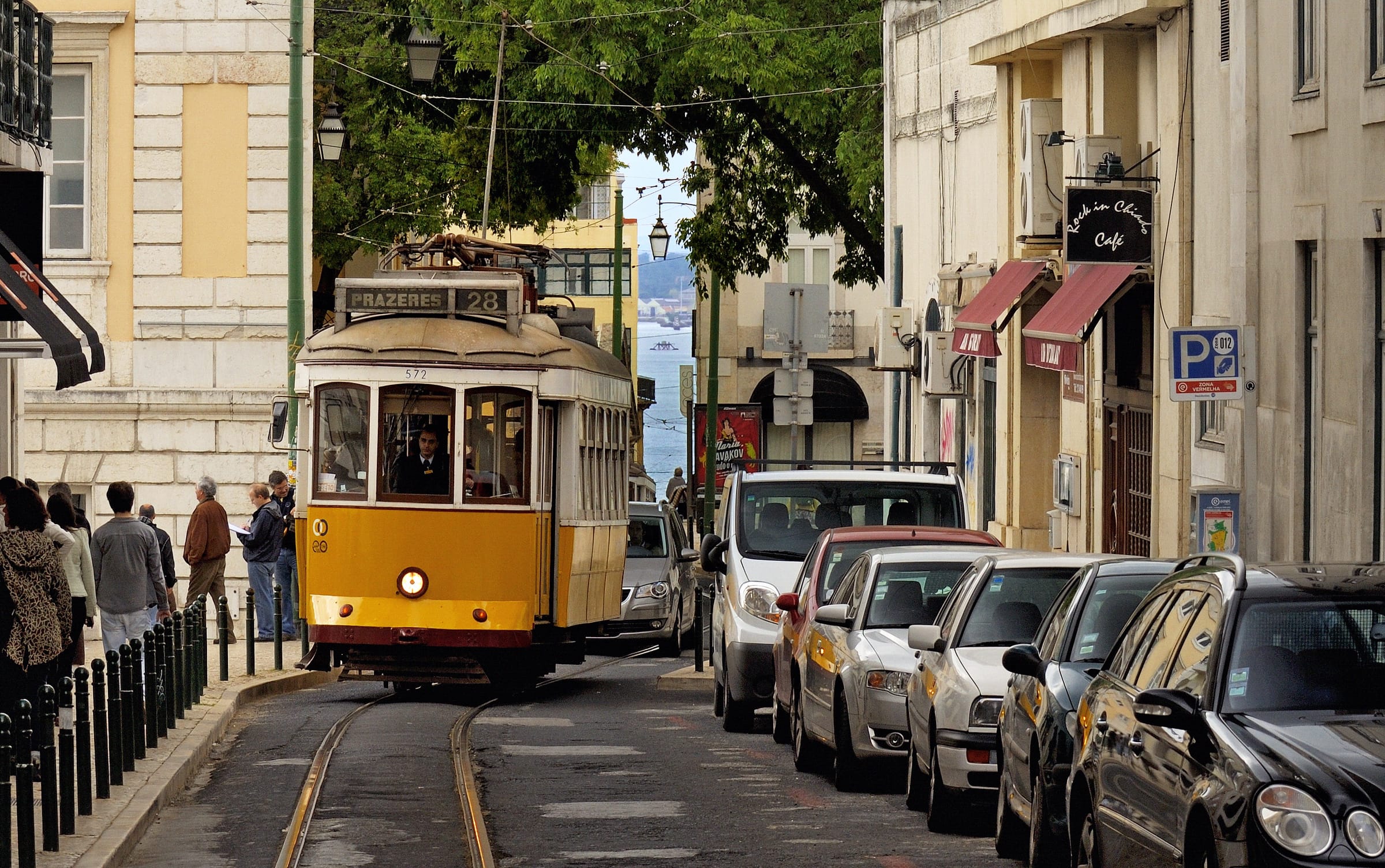
Seven hills, tram 28, and the Alfama quiet before the crowds
- Budget
- $55 a day
- On foot
- Walkable
- Getting around
- Good
- Best months
- March to May, September to October
- First solo trip
- Good first trip
- Wifi
- Excellent
- English
- Expensive
- Places to stay
- 8+ read
01 of 08
The read
Lisbon is one of the most beginner-friendly solo cities in Europe, with easy logistics, good English, and a city that moves at a pace that suits you.
What holds up
- English is widely spoken, especially among younger Lisboetas, and the metro ticket machines offer instructions in English.
- The flat Baixa district and well-lit central neighbourhoods mean a woman can walk freely well into the evening.
- Uber and Bolt both operate and keep late nights simple, with short, inexpensive trips across the centre.
What to weigh
- July and August bring heavy tourist crowds to the centre, which makes the peak pickpocket season on Tram 28 and in Baixa worse. April to June or September to October are noticeably calmer.
- Lisbon is genuinely hilly. Alfama and Bairro Alto involve real climbs on uneven cobblestones, so comfortable shoes are less a suggestion and more a condition of enjoying the city.
Lisbon is one of the most walkable capitals in Europe, though your calves will feel the seven hills by day two. The tram 28 route is iconic but packed. Instead, walk the Alfama district in the morning when the narrow streets are quiet and the tile work catches the light. Graca and Mouraria are less touristed neighbourhoods, with local tascas serving lunch plates.
Solo dining is easy and common. Sit at the counter of a cervejaria for grilled fish and a glass of vinho verde. Time Out Market is convenient but overpriced. For better value, eat where you see Portuguese locals eating. Coffee culture is strong: a bica, an espresso taken standing at the counter, is the local habit.
Accommodation in the centre is mostly private rooms in small guesthouses. The metro is clean and covers the main areas, with a rechargeable Viva Viagem card. The central neighbourhoods stay busy into the night, including on foot. The main annoyance is occasional persistent tuk-tuk drivers, which a firm "no, obrigada" handles. The nearby beach towns of Cascais and Costa da Caparica are easy 30-40 minute train or ferry rides for a day by the water.
02 of 08
Common questions
What people ask about Lisbon, answered with specifics rather than in general terms.
- Is Lisbon a good place to travel alone?
- Lisbon is one of the easier places in the region to travel alone for the first time. English is widely spoken, especially among younger Lisboetas, and the metro ticket machines offer instructions in English.
- How much does Lisbon cost a day?
- Around $55 a day covers a bed, food and local transport for one person in Lisbon.
- How do you get around Lisbon?
- Metro. Four lines covering the central city, Oriente station, and the airport. Clean and efficient. The green line connects the airport to the centre in about 25 minutes. Buy a Viva Viagem card at any station.
- When is the best time to visit Lisbon?
- March to May, September to October is the window most travellers aim for in Lisbon. July and August bring heavy tourist crowds to the centre, which makes the peak pickpocket season on Tram 28 and in Baixa worse. April to June or September to October are noticeably calmer.
- Where should you stay in Lisbon on your own?
- The centre of Lisbon is compact enough to walk, so the area you pick matters more than the property. Seven hills, tram 28, and the Alfama quiet before the crowds
03 of 08
Where to stay
Each of these has been read rather than listed. The full set is on the stays page.
- Lisbon Destination Hostel
Women keep returning for the curtained bunks and free breakfast at this award-winning hostel inside Santa Apolónia station. The 24-hour bar means the common areas stay lively well past midnight, though being inside a terminus means early trains will find you.
hostel · 4.7 from 2057 reviews - Home - Lisbon Hostel
Women keep coming back for the family dinners, which are genuinely good and draw the whole hostel together around one table. Manel at the front desk is the kind of staff member who makes a solo arrival feel like a return visit. No specific catch surfaces in the reviews.
hostel · 4.7 from 1655 reviews - Safestay Lisbon Bairro Altohotel · 3.9 from 1273 reviews
- Yes! Lisbon Hostelhostel · 4.6 from 1183 reviews
- The One Palácio da Anunciadahotel · 4.8 from 1115 reviews
- Memmo Alfamahotel · 4.6 from 959 reviews · about $200 a night
- The Lumiares Hotel & Spa
Features an extensive spa carved from a 16th-century palace with sauna, steam room.
hotel · 4.6 from 596 reviews · about $213 a night - Living Lounge HostelWomen only
Female-only dorm options are available alongside mixed dorms.
hostel · 4.7 from 531 reviews
04 of 08
What to know
- 01
The miradouros are free and spectacular
Lisbon's hilltop viewpoints (Miradouro da Graca, da Senhora do Monte, Portas do Sol, Santa Luzia) offer panoramic views. Each has a different angle. They are public, free, and ideal for solo moments with the city.
- 02
Remote work infrastructure is excellent
Lisbon has dozens of co-working spaces and cafes with strong Wi-Fi. Second Home, Outsite, and numerous specialty coffee shops in Principe Real and Santos cater to the remote work community.
- 03
Keep bags in front, phones in inside pockets. This is a tourist-density issue, not a city-wide concern.
- 04
Portuguese is appreciated
English is widely spoken, especially among younger Lisboetas. But even basic Portuguese (obrigada, bom dia, a conta por favor) is warmly received. Portuguese people appreciate the effort.
- 05
The pasteis de nata hierarchy matters
Pasteis de Belem in Belem is the famous one, but locals debate whether it is actually the best. Try multiple pastelarias and form your own opinion. Manteigaria in Chiado is a strong contender. Eat them warm.
05 of 08
Getting around
- 01
Metro
Four lines covering the central city, Oriente station, and the airport. Clean and efficient. The green line connects the airport to the centre in about 25 minutes. Buy a Viva Viagem card at any station.
- 02
Walking
Lisbon is very walkable but the hills are real. Comfortable shoes are essential. The Baixa is flat. Going from Baixa to Bairro Alto or Alfama involves serious inclines. Elevadores (funiculars) help.
- 03
Trams and buses
Tram 28 is iconic but packed with tourists. Tram 15E to Belem is more practical. Buses cover areas the metro does not. All use the same Viva Viagem card.
- 04
Train to day trips
CP trains from Rossio station reach Sintra (40 min) and from Cais do Sodre reach Cascais (35 min). Both are easy, frequent, and worth a day trip.
- 05
Ride-hailing
Uber and Bolt both operate and are useful for hills and late nights. Trips within the centre are short.
06 of 08
How the day runs
Lisbon starts later than northern Europe. Specialty coffee spots open 8:00-9:00. Traditional cafes with pasteis de nata open earlier. The Alfama miradouros (viewpoints) are best before 10:00 before tour groups arrive. The Feira da Ladra flea market runs Tuesday and Saturday mornings.
A galao (latte) and pastel de nata at the counter of any local pastelaria is the real Lisbon breakfast.
Lunch is a sit-down affair, usually 13:00-14:30. The tascas (small traditional restaurants) fill fast. Afternoon is for museums (MAAT, Museu Nacional do Azulejo, Gulbenkian), walking neighbourhoods, or taking the train to Sintra (40 min). Shops often close 13:00-14:30.
The Museu Nacional do Azulejo (tile museum) in a 16th-century convent is one of Lisbon's best and least crowded museums.
Dinner rarely starts before 20:00. Bairro Alto has the densest restaurant concentration. Principe Real is more refined. Fado houses in Alfama and Mouraria start performances around 21:00-21:30. Bairro Alto nightlife spills onto the streets from 23:00, with bars open until 2:00-3:00.
For authentic fado, book a smaller house in Alfama. The tourist-oriented ones can be overproduced.
07 of 08
What to eat
- 01
Pastel de Nata
Flaky puff pastry cup filled with a blistered egg custard, dusted with cinnamon and powdered sugar. Lisbon's most famous bite.
Pasteis de Belem in Belem for the original (since 1837). Manteigaria on Rua do Loreto for no queues and equally good pasteis.
- 02
Bacalhau a Bras
Shredded salt cod scrambled with eggs, matchstick fries, and onions. One of 365 Portuguese ways to cook bacalhau.
Cervejaria Ramiro for a seafood feast, or any tasca (traditional tavern) in Alfama.
- 03
Bifana
Thin marinated pork cutlet in a crusty bread roll with mustard. Portugal's answer to the steak sandwich, and arguably better.
As Bifanas do Afonso near Cais do Sodre, or Casa das Bifanas in Praca da Figueira.
- 04
Sardinhas Assadas
Whole sardines grilled over charcoal and served on bread that soaks up the juices. Best during Santos Populares festival in June.
Tasca do Chico in Alfama, or any waterfront restaurant in Cacilhas across the river.
- 05
Ginjinha
Sour cherry liqueur served in a small cup, sometimes with a cherry in the bottom. A shot-sized Lisbon tradition.
A Ginjinha on Largo de Sao Domingos. Standing room only, one drink, move on. That's the ritual.
08 of 08
Neighbourhoods
- 01
Alfama
Lisbon's oldest neighbourhood with winding lanes and fado music at night
- 02
Bairro Alto
Lisbon's late-night bar district that stays quiet until sundown
- 03
Baixa
Lisbon's flat city centre grid between two main plazas
- 04
Belem
Lisbon's waterfront monument district with the original pastel de nata