
Baguio for women travelling alone
At 1,500m, 15-20C, with a walkable centre along Session Road and steep hills beyond.
- On foot
- Walkable
- Getting around
- Good
- Wifi
- Good
- Places to stay
- 8+ read
01 of 07
The read
Baguio rewards the solo woman who shows up midweek, packed for cool weather, and ready to walk.
What holds up
- English is widely spoken across the city, from market stalls to taxi drivers.
- The centre is genuinely walkable, with Session Road, Burnham Park, and the public market all within ten minutes of each other.
- A young university crowd keeps cafes, art spaces, and the night market lively without the aggression of bigger city nightlife.
What to weigh
- Weekend and holiday traffic from Manila is severe; the 5-6 hour bus ride can stretch much longer, and accommodation fills fast.
- There is no commercial flight into Baguio right now, so every approach is a long land trip requiring some motion-sickness planning on winding mountain roads.
Baguio is the Philippines' mountain retreat, about five to six hours north of Manila by bus at 1,500 metres elevation. The temperature drops to 15-20C here, which makes it a welcome break from the tropical heat. Session Road is the main commercial strip, running downhill through the centre of town with restaurants, shops, and cafes on both sides.
Burnham Park, the city's central green space, has a boating lagoon and gardens. The Tam-Awan Village is an artists' community with traditional Cordillera huts and occasional cultural performances. The public market is excellent for strawberries, ube jam, woven goods, and fresh vegetables from the surrounding highland farms.
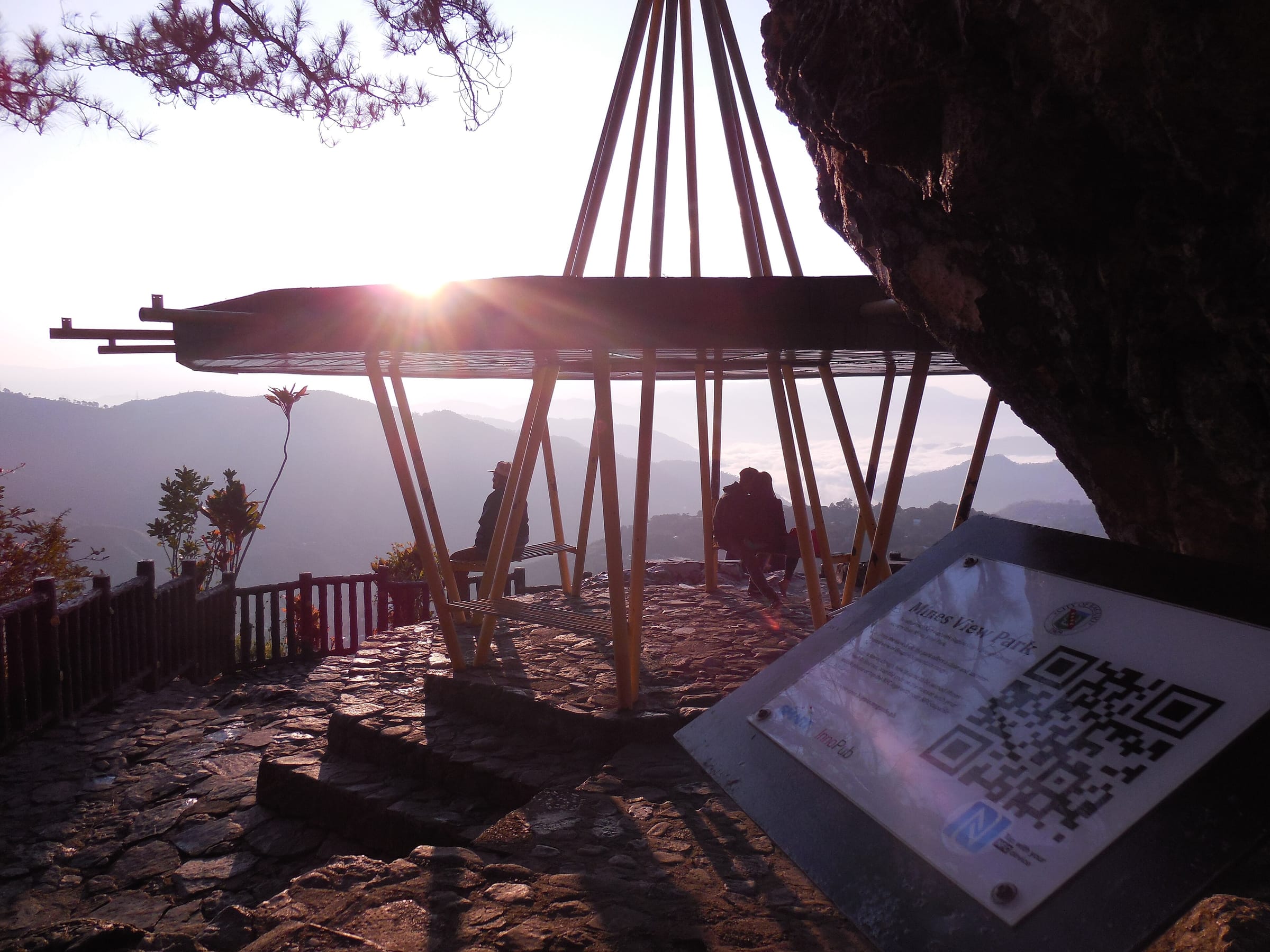
The central area around Session Road and Burnham Park is walkable, and it stays busy into the evening. Jeepneys and taxis handle the steeper routes to places like Mines View Park and the BenCab Museum. The city has a creative, university-town feel thanks to several colleges in the area. It works well as a two to three day trip from Manila, especially when the lowland heat becomes oppressive.
02 of 07
Common questions
What people ask about Baguio, answered with specifics rather than in general terms.
- How do you get around Baguio?
- Jeepneys and taxis within the city. Jeepneys run fixed routes along Session Road and to major points. Taxis are metered and widely available. Grab works in Baguio. The city centre is walkable but steep, so taxis are useful for uphill trips.
- Where should you stay in Baguio on your own?
- The centre of Baguio is compact enough to walk, so the area you pick matters more than the property. At 1,500m, 15-20C, with a walkable centre along Session Road and steep hills beyond.
03 of 07
Where to stay
Each of these has been read rather than listed. The full set is on the stays page.
- John Hay Hotels Garden Wing (formerly The Manor at Camp John Hay)
The garden is photogenic and features a lightshow.
hotel · 4.6 from 4107 reviews - John Hay Hotels Forest Wing (Formerly The Forest Lodge)hotel · 4.4 from 1465 reviews
- The Podium Boutique Hotel
Rooms and suites in Lower Baguio, with a cafe/bar, breakfast, and 2pm check-in.
hotel · 4.0 from 306 reviews - ASHBURN'S TRANSIENT CAMPO SIOCOhostel · 3.7 from 269 reviews
- OLD ORANGEWOOD Bed and Breakfast
1940s schoolhouse with plain rooms, a cafe, terrace and free Wi-Fi; check-in from 2pm.
homestay · 4.3 from 192 reviews - 3BU Hostel Baguio - Session-Gov Packhostel · 4.0 from 152 reviews
- Wanay's Rocky Mountain Homestayhomestay · 4.6 from 123 reviews
- Baguio Transienthomestay · 4.4 from 95 reviews
04 of 07
What to know
- 01
University town energy
Multiple universities give Baguio a young, progressive feel compared to other Philippine cities. Coffee shops double as study spaces. There is a visible art and music scene. This makes it a comfortable place for solo women.
- 02
Pack for cold
Baguio is the only major Philippine city where you need a jacket. December-February nights can drop below 10C. Guesthouses do not always have heating. The public market sells warm layers if you arrive unprepared.
- 03
Ukay-ukay culture
Secondhand clothing markets (ukay-ukay) are a Baguio institution. The Harrison Road night market has extensive ukay-ukay sections. Quality ranges from fast fashion castoffs to genuine finds. Arriving early gets the best picks.
- 04
Sagada is worth the trip
The mountain town of Sagada (6 hours north) has hanging coffins, caves, and rice terraces. It is a popular solo traveller destination. Shared vans leave from Dangwa station. Book early during Holy Week and long weekends when Sagada fills up.
05 of 07
Getting around
- 01
Jeepneys and taxis within the city
Jeepneys run fixed routes along Session Road and to major points. Taxis are metered and widely available. Grab works in Baguio. The city centre is walkable but steep, so taxis are useful for uphill trips.
- 02
Walking is the centre's default
Session Road, Burnham Park, and the public market are all within a 10-minute walk of each other. Beyond the centre, hills make walking tiring. Wear shoes with grip, as roads get slippery in rain.
- 03
Buses to and from Manila
Multiple bus companies run the Manila-Baguio route (5-6 hours). Victory Liner and JoyBus are the most popular. JoyBus runs a direct deluxe service. Terminals are at the south end of the city.
- 04
Vans to nearby attractions
Shared vans to La Trinidad (strawberry farms), Sagada, and Banaue leave from the Dangwa terminal. Sagada is about 6 hours by van. Booking a day in advance is advisable for Sagada trips.
06 of 07
How the day runs
Burnham Park has joggers and tai chi groups from dawn. The public market is busiest in the morning for fresh produce and ube (purple yam) products. Session Road cafes open around 7am. Good Shepherd Convent sells ube jam, peanut brittle, and strawberry preserves and gets a line by mid-morning.
Morning fog is common. It usually clears by 10am.
BenCab Museum is the standout art space, about 20 minutes from the center by taxi. The Tam-awan Village is a reconstructed Cordillera village with artist studios. Camp John Hay has pine-lined walking trails. Cafe culture is strong, especially around upper Session Road.
Afternoons can bring sudden rain, especially June through November. Carry a layer and a rain jacket.
Night market on Harrison Road sets up nightly from around 8pm with street food, ukay-ukay (thrift clothing), and local crafts. Session Road restaurants serve Filipino-Cordilleran food. The bar scene is small but present, centered around upper Session and the Camp John Hay area.
Baguio gets cold at night, especially December through February. Temperatures can drop below 10C.
07 of 07
Neighbourhoods
- 01
Session Road District
The bustling commercial heart of Baguio centered around the famous Session Road with shopping, dining, and entertainment venues.
- 02
Burnham Park Area
The central recreational district surrounding Burnham Park with cafes, restaurants, and easy access to the city's main attractions.
- 03
Camp John Hay & Outlook Drive
The upscale leisure zone featuring luxury hotels, fine dining establishments, and scenic mountain views along Outlook Drive.
- 04
Upper Baguio & Tam-awan
The cultural and artistic district in the northern hills featuring indigenous art villages, nature parks, and panoramic city views.
- 05
Lower Baguio & Kennon Road
The southern gateway area along Kennon Road with budget accommodations, local eateries, and access to scenic mountain drives.