
Kuala Lumpur for women travelling alone
LRT, MRT and monorail from KL Sentral, and Jalan Alor's hawker stalls run late.
- Budget
- $35 a day
- On foot
- somewhat walkable
- Getting around
- Excellent
- Best months
- May to July, December to February
- First solo trip
- Good first trip
- Wifi
- Excellent
- English
- Expensive
- Places to stay
- 8+ read
01 of 10
The read
KL rewards women who come organised: the rail system is excellent, English is everywhere, and the food alone is worth the trip.
What holds up
- English is widely spoken across hotels, malls, restaurants, and transport, with clear English signage on all rail lines.
- The LRT, MRT, and Monorail rail network covers every area a first-time traveller needs, and Grab, the ride-hailing app, fills every gap.
- Solo dining is completely ordinary here, with counter and bar seating at hawker stalls making eating alone feel natural, not conspicuous.
What to weigh
- KL is built for cars, not walking: moving between neighbourhoods on foot often means highway overpasses and missing pavements, so plan your rail and Grab rides before you go out, not after.
- Rush hour road traffic, between 7 to 9am and 5 to 8pm, is among the worst in Southeast Asia. Grab during those windows will be slow and expensive. Use the train instead.
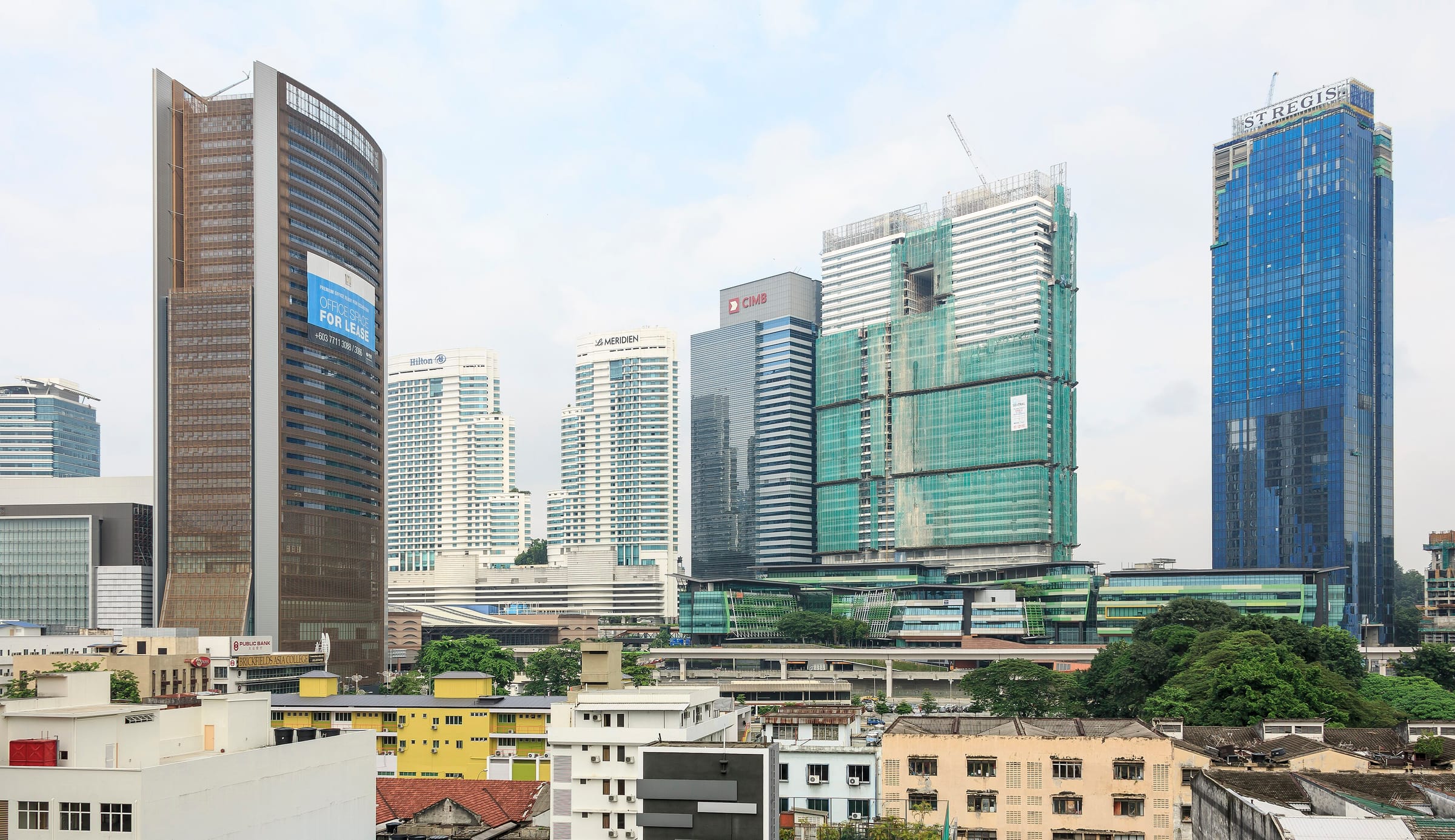
Kuala Lumpur is a city of contrasts: Malay, Chinese, and Indian neighbourhoods sit next to glass towers and sprawling malls. Solo women will find it modern, well-connected, and easy to navigate. Bukit Bintang is the main commercial and nightlife area, while Chinatown (Petaling Street) and Little India offer street food and market browsing. The KLCC area around the Petronas Towers is polished and walkable.
Public transport is reliable. The LRT, MRT and monorail lines connect most tourist areas, and Grab rides across the city centre are cheap. KL Sentral is the main transit hub. For food, Jalan Alor in Bukit Bintang is the go-to hawker street, with stalls open until late.
KL works well as a starting point for Malaysia. The airport connects to Penang, Langkawi, Borneo, and most of Southeast Asia on budget airlines. Two to three days covers the main sights: Batu Caves, Petronas Towers, Central Market, and the Islamic Arts Museum. The main tourist and commercial areas are busy through the day, and the tropical heat makes an air-conditioned mall break inevitable by mid-afternoon.
02 of 10
Who this suits
KL works well for women who want an Asian city with strong infrastructure, excellent food at every price point, and minimal friction getting around. It suits travellers who like moving between neighbourhoods independently and eating alone without any social weight attached to it.
03 of 10
Common questions
What people ask about Kuala Lumpur, answered with specifics rather than in general terms.
- What should I wear in Kuala Lumpur as a solo woman?
- KL is a city where dress norms vary by location. In Bukit Bintang and Bangsar, shorts and sleeveless tops are standard. At mosques and Batu Caves, shoulders and knees need to be covered. A light scarf in your bag handles most situations.
- How do I get from KLIA airport to the city centre?
- The KLIA Ekspres train runs from both KLIA and KLIA2 to KL Sentral in 28 and 33 minutes respectively. It runs from around 5am to 12:35am. Grab is available from the airport but takes 45-70 minutes depending on traffic and costs more than the train.
- Is it easy to travel around KL without speaking Malay?
- Yes. English is widely spoken in the tourist areas, malls, transport hubs, and most restaurants. Signage in the rail system is in English. In Chow Kit's wet market, Malay and Cantonese are more common, but pointing and numbers work fine.
- Can I eat alone at restaurants without it feeling awkward?
- Solo dining is completely unremarkable in KL. Mamak stalls, hawker centers, mall food courts, and most cafes all have counter seats or small tables designed for one. Nobody will seat you somewhere odd or try to fill your table.
- What should I know about using Grab?
- Download Grab before you arrive and add a card or use cash. The app works for Grab Car (standard), GrabBike (motorcycle, faster in traffic), and GrabFood. Drivers follow the GPS route shown in the app; you can track the ride in real time and share your trip with someone.
- Are there areas where I should avoid walking at night?
- Certain stretches of Chow Kit away from the main market road have limited foot traffic and patchy lighting after 10pm. Petaling Street (Chinatown) winds down after 9pm and the side streets empty out. Bukit Bintang, KLCC, and Bangsar Baru stay busy and well-lit late.
04 of 10
Where to stay
Each of these has been read rather than listed. The full set is on the stays page.
- The RuMa Hotel and Residences
Staff here give restaurant recommendations without being asked, and every reviewer mentions how genuinely attentive the team is. The reviews are light on solo-specific detail, so if a women-only floor or late-night desk matters to you, ring ahead to confirm.
hotel · 4.6 from 2305 reviews · about $197 a night - Kingston Hotel 3 @ Kuala Lumpur (Formerly known as Swing and Pillows @ Jalan Baba, Pudu)hotel · 4.4 from 1440 reviews
- Travelogue Guesthouse Bukit Bintang, Kuala Lumpur.
Requires advance communication of arrival time with hosts, suggesting no 24-hour reception.
homestay · 4.6 from 1359 reviews - Villa Samadhi Kuala Lumpur
Solo women pick Villa Samadhi for the lush, secluded grounds and the adults-only quiet it provides. Staff are noted for personal touches and local recommendations that feel genuinely useful. The bar on-site is worth knowing about if an early night matters to you.
homestay · 4.7 from 1321 reviews - The Chow Kit - an Ormond Hotel
Chow Kit has a gritty reputation but is known for authentic street food and market culture.
hotel · 4.4 from 1114 reviews · about $75 a night - KLoé Hotelhotel · 4.6 from 956 reviews
- PODs The Backpackers Home & Cafe, Kuala Lumpur.
Women come back to PODs for the cafe, which doubles as a proper workspace and a place to fall into conversation. The Bukit Bintang location means everything is on your doorstep. The reviews are thin on specifics, so go in without strong expectations either way.
hostel · 4.1 from 955 reviews - Chinatown Hostel by Mingle - Rooftop Private Jacuzzi with Bar
Rooftop terrace, bar and guest kitchen; reception 7am to midnight, check-in from 2pm.
hostel · 4.5 from 888 reviews
05 of 10
What to know
- 01
Jalan Alor is the essential food street
This single street in Bukit Bintang has dozens of hawker stalls and open-air restaurants serving Chinese-Malay dishes. Solo diners are common. Point at what others are eating if the menu is confusing. Go between 7-9pm for the full experience.
- 02
Batu Caves has a dress code
Shoulders and knees must be covered to climb the 272 steps to the main temple cave. Sarong rentals are available at the base. Go before 9am to avoid the heat and crowds. The rainbow staircase is steeper than it looks.
- 03
The covered walkway from KLCC to Bukit Bintang
An elevated, air-conditioned pedestrian walkway connects Suria KLCC mall to Pavilion in Bukit Bintang. It takes about 15 minutes and saves you from the heat and traffic. Enter from the ground floor of either mall.
- 04
Neighbourhood night markets rotate daily
Different neighbourhoods host their pasar malam on different nights. Taman Connaught (Wednesday) is the longest in KL. Ask your accommodation which market is on that night. These are local markets, not tourist ones, and the food is excellent.
- 05
The city is more diverse than expected
KL's Malay, Chinese, Indian, and international neighbourhoods each have distinct food, architecture, and atmosphere. Brickfields (Little India) feels completely different from Chinatown, which feels different from Bangsar. Exploring several gives you the full picture.
06 of 10
Getting around
- 01
The rail system covers central KL well
The LRT, MRT, Monorail, and KTM Komuter lines connect most tourist areas. The MRT Kajang line is the newest and most useful, linking Bukit Bintang to KLCC to Merdeka Square. Buy a Touch 'n Go card for all public transit.
- 02
Grab is essential for gaps
Where the train does not go, Grab fills in. Rides across the city are quick outside rush hour. Peak hours (7-9am, 5-8pm) bring serious traffic and surge pricing.
- 03
Walking is neighbourhood-specific
You can walk within KLCC, within Bukit Bintang, or within Chinatown, but walking between them involves highway overpasses, construction zones, and missing pavements. The covered walkways connecting Bukit Bintang to KLCC are air-conditioned.
- 04
Rush hour traffic is extreme
KL's traffic congestion is among the worst in Southeast Asia. Avoid road transport between 7-9am and 5-8pm. The rail system is the only reliable way to move during peak hours.
07 of 10
How the day runs
Temples, markets, nasi lemak
Batu Caves is best visited early before tour groups arrive. Chinatown's wet market is busiest before 9am. Nasi lemak stalls and kopitiams (coffee shops) are the standard breakfast. KLCC Park is pleasant for a morning walk before the heat builds.
Malls, museums, cafes
The afternoon heat drives people into air-conditioned malls (Pavilion, Suria KLCC, Mid Valley). The Islamic Arts Museum and National Museum are both worth a visit. KL has a strong specialty coffee scene, especially in the Bangsar and TTDI neighbourhoods.
Street food, rooftop bars, night markets
Jalan Alor in Bukit Bintang is the most famous food street, busy from 6pm until past midnight. Rooftop bars around KLCC offer skyline views. The Changkat Bukit Bintang strip has bars and live music. Night markets (pasar malam) rotate through different neighbourhoods each night.
08 of 10
What to eat
- 01
Nasi Lemak
Coconut milk rice with sambal, fried anchovies, roasted peanuts, cucumber, and a hard-boiled egg. Malaysia's national dish and the perfect breakfast.
Village Park Restaurant in Damansara Uptown (add their famous fried chicken), or any mamak stall.
- 02
Roti Canai
Flaky, buttery flatbread torn by hand and dipped in dhal or curry sauce. Watch the roti man stretch and flip the dough.
Any mamak restaurant, open 24 hours. Valentino's in Bangsar for excellent roti and teh tarik.
- 03
Char Kway Teow
Flat rice noodles wok-fried over extreme heat with prawns, cockles, bean sprouts, chives, and dark soy. Smoky and rich.
Lorong TAR hawker stalls, or Madras Lane in Chinatown.
- 04
Cendol
Shaved ice dessert with green rice flour jelly, coconut milk, and palm sugar syrup. Cooling, sweet, and distinctly Malaysian.
Penang Road Famous Cendol has a KL outpost, or any hawker centre during the heat of the day.
- 05
Satay
Charcoal-grilled marinated meat skewers served with a chunky peanut sauce, cucumber, and pressed rice cakes.
Sate Kajang Hj Samuri has branches across KL. Best eaten fresh off the grill.
09 of 10
Neighbourhoods
- 01
Bukit Bintang
The commercial and nightlife centre of KL, anchored by Jalan Alor street food and the Pavilion mall complex. Pavements are wide, street lighting is dense, and the area stays busy well past midnight.
Best for First-timers who want walkable access to food, shopping, and the metro. - 02
KLCC
Centered on the Petronas Twin Towers and the 50-acre KLCC park, this corridor is hotel-heavy and polished. The park has lit jogging paths used morning and evening by residents.
Best for Women who want proximity to Suria KLCC mall, the park, and business-district infrastructure. - 03
Bangsar
An established residential neighbourhood with a long strip of cafes, wine bars, and brunch spots along Jalan Telawi. More local professionals than tourists; better for a second or third day.
Best for Solo women who want a neighbourhood feel and good coffee without the tourist density of Bukit Bintang. - 04
Chow Kit
A dense, working-class Malay neighbourhood built around a wet market that runs from early morning. Jalan Tuanku Abdul Halim has serious nasi lemak and char kway teow at street stalls that open before 7am.
Best for Food-focused travellers who want to eat where locals eat, not where tourists are sent. - 05
Brickfields (Little India)
The Tamil heart of KL, packed with flower garland sellers, banana leaf rice restaurants, and fabric shops. Jalan Tun Sambanthan has wide covered footpaths and stays active into the evening.
Best for Anyone who wants South Indian food and the sensory density of a genuinely functional ethnic quarter.
10 of 10
Local knowledge
The operational detail that is obvious once you are there and impossible to guess before.
- Grab prices show before you confirm. If surge pricing looks high, wait five minutes and check again.
- Most malls open at 10am but their food courts open later; don't plan an early lunch inside a shopping centre.
- The free GoKL City Bus runs four colour-coded routes through the centre and connects major LRT stations. No app needed, just wave it down.
- 7-Eleven and FamilyMart stores are everywhere and sell decent nasi lemak in the morning before street stalls set up.
- Touch 'n Go is the transit card for all rail lines. Load it at station machines with cash. A single card works across LRT, MRT, KTM, and the airport express.
- Pharmacies (Watson's, Guardian) sell sunscreen, electrolyte sachets, and stomach remedies at reasonable prices; useful for the first hot week.
- Rain in KL is usually sharp and short. If you duck into a shophouse or mall entrance for twenty minutes, it typically passes.