
Luang Prabang for women travelling alone
A 2km peninsula walkable end to end, with alms-giving at dawn and 30 monasteries.
- Budget
- $35 a day
- On foot
- very walkable
- Getting around
- Limited
- Best months
- November to February
- First solo trip
- Good first trip
- Wifi
- fair
- English
- Moderate
- Places to stay
- 8+ read
01 of 10
The read
Luang Prabang is compact, calm, and built for a woman who wants to move at her own pace.
What holds up
- The entire old town peninsula is walkable in 30 minutes, so you are rarely dependent on transport.
- English reaches most guesthouses, cafes, and tour operators in the old town.
- Solo women travellers are a normal part of the daily scene here, at the bakeries, the night market, and the falls.
What to weigh
- The Mekong can flood between July and September, limiting some river activities and affecting road conditions.
- ATMs are limited, so arrive with USD or Thai Baht as backup, and exchange only what you need at the airport.
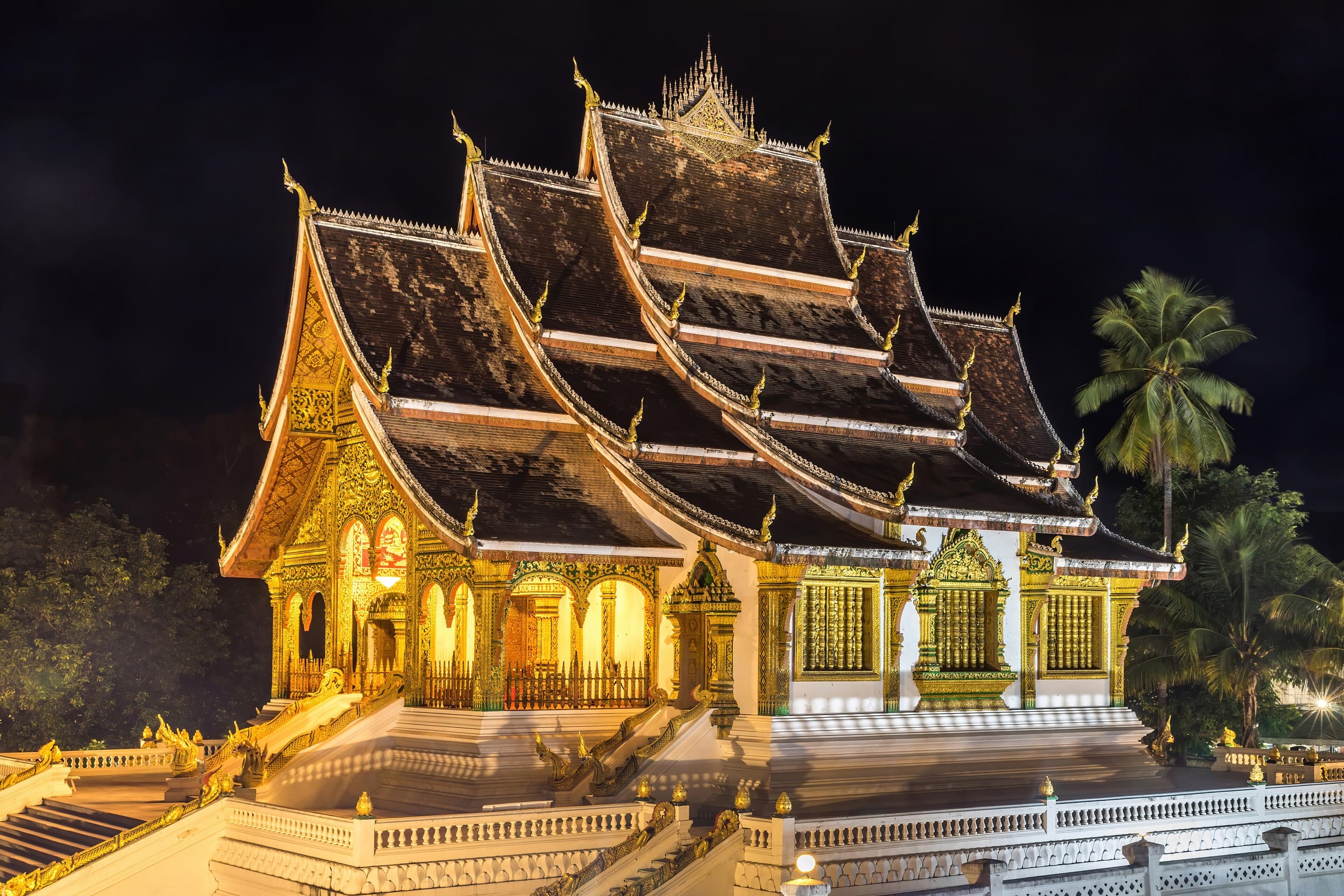
Luang Prabang is one of Southeast Asia's most beautiful small cities. Set at the meeting point of the Mekong and Nam Khan rivers, the UNESCO-protected old town is a grid of saffron-robed monks, French colonial villas, and gilded temples. The morning alms ceremony (monks collecting rice at dawn) is the defining daily ritual. Observe quietly from a respectful distance and do not use flash photography.
The night market along Sisavangvong Road sets up every evening with textiles, handicrafts, and food stalls. Kuang Si Falls, a turquoise waterfall 30 minutes outside town, is the main day trip, reachable by tuk-tuk or minivan. The Mekong river cruises to Pak Ou Caves and the nearby weaving villages of Ban Xang Khong are worth a half-day.
Luang Prabang is calm and walkable. The old town sits between two rivers and takes twenty minutes to cross. The old town is compact, and the pace is slow. Accommodation runs from dorm beds to French-villa boutique stays. The cafe scene along the main street is excellent for solo mornings. Two to three days covers the essentials, but the atmosphere invites lingering.
02 of 10
Who this suits
Luang Prabang suits travellers who want slow days, a defined town that doesn't require constant planning, and access to genuine Buddhist culture without a megacity around it. It rewards people who are happy to eat noodles at 7am, read by a river in the afternoon, and be in bed by ten.
03 of 10
Common questions
What people ask about Luang Prabang, answered with specifics rather than in general terms.
- Can I travel to Luang Prabang alone without speaking Lao?
- Yes. English is widely spoken in guesthouses, restaurants, and tour operations in the old town. Outside the tourist centre, pointing and a pocket translation app handles most situations.
- What should I wear in the temples?
- Shoulders and knees covered is the consistent requirement. Lightweight cotton trousers and a short-sleeved shirt with a scarf over it works in the heat. Some temples provide wraps at the entrance, but not all.
- How do I get from the airport to the old town?
- The airport is about four kilometres from the town centre. Official airport taxis and tuk-tuks operate from the terminal. The ride takes ten to fifteen minutes depending on traffic.
- Is it possible to do a day trip to Kuang Si Waterfall independently?
- Completely. Walk to the main tuk-tuk area near the night market or ask your guesthouse. Tuk-tuks do shared or private runs. Agreeing on pickup time when you arrive at the falls avoids a long wait on the way back.
- What is the currency situation? Do I need cash?
- Lao kip is the official currency. Cash is necessary almost everywhere outside the more established hotels and restaurants. ATMs are available on the main road in the old town. Thai baht is also widely accepted at many vendors.
- Are there other solo travellers to meet here?
- Yes. Luang Prabang consistently draws independent travellers on longer Southeast Asia trips. Guesthouse common areas, Saffron Coffee, and organized day trips to Kuang Si are all places where conversation happens naturally.
04 of 10
Where to stay
Each of these has been read rather than listed. The full set is on the stays page.
- Mad Monkey Luang PrabangWomen onlyhostel · 4.7 from 718 reviews
- Sanga Hostel and souvenirhostel · 4.9 from 592 reviews
- Maison Dalabua Hotelhotel · 4.7 from 575 reviews
- Senglao Boutique Hotel
The shuttle electric car runs you into the old town, which matters given the hotel sits outside it. Rooms are large and genuinely clean, and breakfast comes as a proper à la carte menu rather than a buffet scramble.
hotel · 4.9 from 442 reviews - The Belle Rive Boutique Hotel
Guests receive a complimentary sunset cruise that navigates away from louder river traffic.
hotel · 4.6 from 394 reviews - Villa Maly Boutique Hotel, Luang Prabang
Boutique hotel with pool area designed for relaxation rather than social activities.
homestay · 4.6 from 245 reviews - The Namkhanhotel · 4.7 from 212 reviews · about $130 a night
- Luang Prabang Oudomlith Villa & Travel
24 hour front desk, in the Old Town, check in from 2pm.
homestay · 4.3 from 199 reviews · about $30 a night
05 of 10
What to know
- 01
The alms ceremony has etiquette
If you want to observe the morning alms-giving, stand at a respectful distance and do not use flash photography. Do not touch the monks or their bowls. Some tourists join the giving line, but this is a genuine religious practise, not a photo opportunity. Watch quietly from across the street.
- 02
The town shuts down early
Luang Prabang has an unofficial 11pm curfew for noise. Most restaurants close by 9-10pm. Bars close by 11:30pm. This is a town for early mornings, not late nights. Adjust your rhythm accordingly.
- 03
Kuang Si Falls gets crowded after noon
The waterfalls are the most popular day trip. Tour buses arrive between 11am and 1pm. Going early (depart town by 9am) or late (arrive at 2pm, stay until closing) gives you fewer crowds. The bear sanctuary at the entrance is also worth visiting.
- 04
The textile market is excellent
The night market sells handwoven Lao textiles including silk scarves, bags, and wall hangings. The weaving villages across the Nam Khan bridge sell directly from the weavers. Quality varies, so look closely at the weave density and finishing.
- 05
French-Lao bakeries are a daily ritual
The French colonial influence left Luang Prabang with genuine baguettes, croissants, and pastries. JoMa, Le Banneton, and several small bakeries serve excellent coffee and baked goods. They become daily meeting points for solo travellers staying more than a day or two.
06 of 10
Getting around
- 01
Walking covers everything
The entire peninsula from the tip to the main market is a 20-minute walk. Most temples, restaurants, cafes, and the night market are within a 10-minute radius. This is a walking town.
- 02
Bicycles for the wider area
Bike rental is available throughout town. Useful for reaching the south side of town, the Phousi Hill entrance, and the weaving villages across the river. The roads are flat and traffic is minimal.
- 03
Tuk-tuks for day trips
Kuang Si Falls, the Pak Ou Caves, and the whiskey village all require tuk-tuk or minivan transport. Arrange through your guesthouse or negotiate at the main road. Shared tuk-tuks to Kuang Si are easy to join.
- 04
Slow boats on the Mekong
The 2-day slow boat from the Thai border (Huay Xai) to Luang Prabang is one of Southeast Asia's classic journeys. Day trips on the Mekong to Pak Ou Caves take about 2 hours upstream.
07 of 10
How the day runs
Alms ceremony, temples, cafes
The alms-giving ceremony begins around 5:30-6am along Sisavangvong Road. After that, the morning market on the riverbank is at its busiest. Temples are open from early morning. French-Lao bakeries and cafes serve excellent coffee and pastries from 7am.
Kuang Si Falls, river activities, rest
Most people visit Kuang Si Falls in the afternoon (30 minutes by tuk-tuk). The turquoise pools are best for swimming between noon and 3pm. In town, the afternoon heat slows everything down. The textile centre and traditional arts workshops run afternoon sessions.
Night market, Mekong sunset, dinner
The night market opens at 5pm along Sisavangvong Road, selling handicrafts, textiles, and street food. The Mekong-side restaurants fill up for sunset. Bowling alley on the edge of town is an oddly popular evening activity. The town is very quiet by 9-10pm.
08 of 10
What to eat
- 01
Khao Piak Sen
Hand-rolled rice noodle soup in a starchy, comforting chicken or pork broth. Laos's answer to pho, heartier and thicker.
Morning market stalls near the Mekong, or Xieng Thong Noodle Soup on the main peninsula.
- 02
Laap
Minced meat salad (traditionally raw, but cooked versions are common) with roasted rice powder, fresh herbs, lime, and dried chili.
Khaiphaen restaurant (social enterprise) on Sisavangvong Road. Beautiful riverside setting.
- 03
Khao Jee
Lao-style baguette sandwich with pate, Lao sausage, and chili sauce. French-Lao fusion from the colonial era.
JoMa Bakery Cafe or the morning sandwich vendors at Luang Prabang night market.
- 04
Sai Oua Lao
Lao herb sausage with lemongrass, galangal, and makrut lime. Different from the Thai version, slightly milder and herbier.
Luang Prabang night market food stalls. They grill them fresh in the evening.
09 of 10
Neighbourhoods
- 01
Old Town Peninsula
The historic core, bounded by both rivers. Colonial French architecture sits next to gilded temples, and the main street, Sakkaline Road, has consistent foot traffic from early morning through late evening.
Best for First-time visitors who want temples, restaurants, and their guesthouse all within walking distance. - 02
Ban Xieng Mouane
A quieter residential pocket on the southern tip of the peninsula near the Mekong confluence. Fewer restaurants but more local life, and the street lighting is consistent along the main lanes.
Best for Travellers who want a guesthouse away from the busier stretches of Sakkaline Road. - 03
Ban Wat That
Just east of the old town, where the Nam Khan river bends. There are several mid-range guesthouses along the riverbank, good breakfast spots, and a small local market on the main road.
Best for Travellers who want river views and a slightly lower price point than central peninsula accommodation. - 04
Ban Phonheuang
North of the night market, this is where you find more locally-run noodle shops and vendors. Less tourist infrastructure, but the streets are straightforward and well-trafficked during the day.
Best for Travellers who want to eat where locals eat and don't need to be steps from a temple. - 05
Chomphet (across the Mekong)
A small village directly across the river from the old town, reached by a short wooden boat crossing. Almost no tourist accommodation, but two important temples and near-zero crowds at most hours.
Best for A half-day trip when you want to see Wat Chomphet and Wat Xieng Men with almost nobody else around.
10 of 10
Local knowledge
The operational detail that is obvious once you are there and impossible to guess before.
- The free bamboo bridge across the Nam Khan is removed during flood season. If it's gone, you cross by boat.
- Most guesthouses observe a quiet hours policy after 11pm. The town has a de facto curfew culture even if it's not formally enforced.
- Sticky rice is eaten by hand here. Watching a local at a street stall briefly before you start will tell you what you need to know.
- Kuang Si Bear Rescue Centre is inside the waterfall park grounds. It's run by a nonprofit and worth the thirty minutes.
- The night market closes early, often by 10pm. If you want to eat from market stalls, go by 8pm.
- Tuk-tuk fares are negotiated before you get in. Agree on a price, confirm it's for the whole vehicle, and get in.
- Morning fog rolls off the Mekong between 6 and 8am. That's when the light on the temples is worth seeing.