
Yogyakarta for women travelling alone
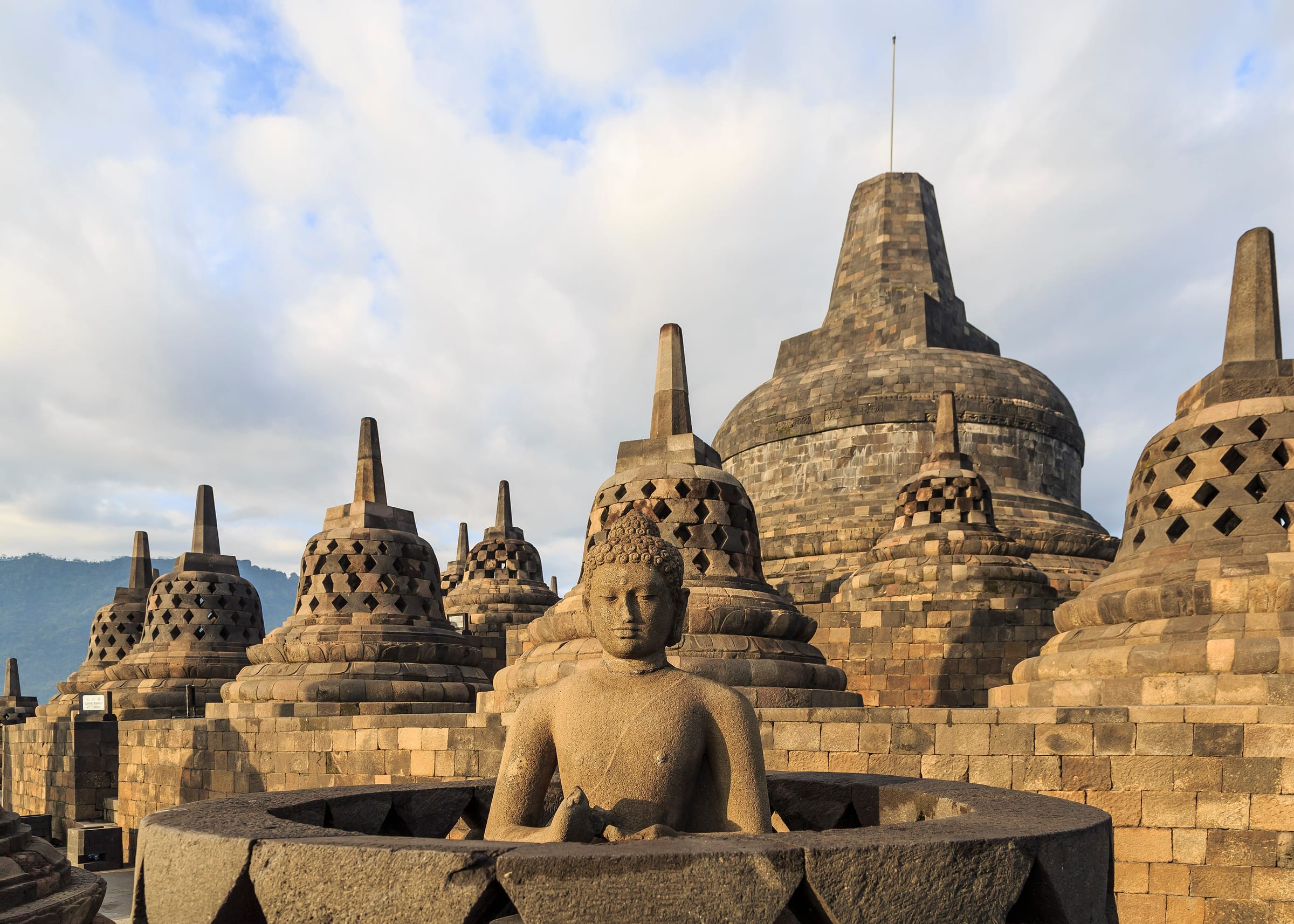
Java's cultural capital, and the base for Borobudur and Prambanan
- Budget
- $20 a day
- On foot
- Walkable
- Getting around
- Good
- Best months
- May to September
- First solo trip
- Some experience helps
- Wifi
- fair
- English
- low
- Places to stay
- 8+ read
01 of 10
The read
Jogja rewards a woman who comes curious: the culture is genuine, the people are warm, and the logistics are manageable.
What holds up
- Grab, the app-based ride-hailing service, operates fully in Yogyakarta including at the airport, giving you a fixed price before you confirm any ride.
- Prawirotaman, a flat one-kilometre street south of the old palace, has a walkable cluster of guesthouses, cafes, and art galleries built for independent travellers.
- The large student population keeps cafes open long hours and makes solo dining a completely ordinary sight.
What to weigh
- English is limited outside Malioboro, Prawirotaman, and the main hotel strip. Download Google Translate with Indonesian before you land.
- The airport sits roughly 40 kilometres from the city centre. The train runs only from around 5am to 9:30pm, so a late-night arrival means a taxi or pre-booked Grab car.
Yogyakarta (locals say Jogja) is Java's cultural capital and the base for visiting Borobudur and Prambanan temples. The city centre around Malioboro Street has budget accommodation, street food vendors, and batik shops. The Kraton (sultan's palace) area to the south is the traditional heart of the city.
Grab and GoJek are the easiest way around. The city is flat, so bicycle rentals work well too. Borobudur sunrise tours leave around 3:30am and include transport. Book through your hotel or a local agency on Sosrowijayan Street rather than online for better prices.
The food is affordable and distinct from Balinese cooking. Gudeg (jackfruit stew) is the local specialty. Eating alone at a warung, a small local restaurant, is completely normal. Jalan Prawirotaman is the traveller area, with cafes, guesthouses and a calmer feel than Malioboro. Solo women are less common here than in Bali. Jogja is used to visitors and the centre is busy through the day. Stick to well-lit streets after dark.
02 of 10
Who this suits
Yogyakarta works well for solo travellers who want intellectual and cultural density rather than beach or nightlife. It suits women who are comfortable with a slower, more exploratory pace and who find genuine pleasure in craft, history, and cooking.
03 of 10
Common questions
What people ask about Yogyakarta, answered with specifics rather than in general terms.
- How do I get from the airport to the city centre?
- Yogyakarta has two airports. From the old Adisutjipto airport (now mainly military and limited flights), a taxi or Grab takes about 20 minutes. From the newer Yogyakarta International Airport in Kulonprogo, the train connects to Tugu station in about 40 minutes and runs throughout the day. Grab also operates from the Kulonprogo arrivals area.
- Can I visit Borobudur independently, without a tour?
- Yes. Grab or a hired driver gets you there in about 90 minutes. Buy tickets in advance through the official site for sunrise access, or walk up to the standard entrance ticket booth on arrival. A local guide at the site is optional; audio guides are available for rent at the entrance.
- What should I wear at the temples?
- Shoulders and knees should be covered at Borobudur and Prambanan. Sarongs are available to borrow or rent at the entrance of both sites if you arrive in shorts. Lightweight long trousers or a sarong-style wrap is more practical than a dress in the heat.
- Is it worth spending more than three days in Yogyakarta?
- Five to seven days is more useful if you want to go deeper than the temple circuit. Borobudur and Prambanan each warrant a full day. Kotagede, a batik workshop, the kraton, Merapi, and a day trip to the Dieng Plateau fill out the rest without rushing.
- Do I need cash, or do cards work?
- Cash (Indonesian rupiah) is necessary for most warungs, markets, becak, and smaller guesthouses. ATMs are available on Malioboro and inside Ambarrukmo Plaza. Most mid-range hotels and larger restaurants accept cards, but carry small bills for daily spending.
- What is the dress code outside of temples?
- Yogyakarta is a conservative Javanese city. Covered shoulders and knees are appreciated in the kraton area, the markets, and residential neighbourhoods. Prawirotaman and the backpacker guesthouse areas are more casual. Swimwear stays at the hotel pool.
04 of 10
Where to stay
Each of these has been read rather than listed. The full set is on the stays page.
- Swiss-Belboutique Yogyakartahotel · 4.8 from 9561 reviews
- Greenhost Boutique Hotel
Solo women mention attentive staff and a walkable location close to Yogyakarta's centre. Rooms and bathrooms are consistently noted as clean and well kept. The reviews are thin on specific caveats, so particular drawbacks are hard to pin down.
hotel · 4.6 from 5102 reviews · about $50 a night - Edu Hotel Malioboro
Single-sex dorms and private rooms off Malioboro, with free breakfast and a rooftop terrace.
hotel · 4.2 from 3596 reviews - SNOOZE Yogyakarta
Cafe, communal kitchens and a garden off Malioboro, reception open 7am to 11pm.
hotel · 4.9 from 1123 reviews - Otu Hostel
Features an outdoor pool and on-site restaurant.
hostel · 4.8 from 786 reviews - BHUMI Hostel
Features a shared kitchen and pantry for guests.
hostel · 4.7 from 394 reviews - Wonderloft Hostel Jogja
Located on Jl. Tirtodipuran in Mantrijeron district.
hostel · 4.6 from 325 reviews - Sleepy Raccoon Hostel
Women keep extending their stay here, often doubling their nights once they arrive. The owner Muk hands out genuinely local eating tips, and the large communal space makes it easy to fall into company rather than eat alone.
hostel · 5.0 from 260 reviews
05 of 10
What to know
- 01
Prawirotaman is the traveller neighbourhood
Jalan Prawirotaman (south of the Kraton) has the highest concentration of guesthouses, cafes, and restaurants used by international travellers. It is quieter and more walkable than the Malioboro area.
- 02
Borobudur sunrise requires early booking
The Manohara Hotel inside the Borobudur complex controls sunrise access. Book at least a day ahead, especially during Indonesian holidays. The sunrise entry opens at 4:30am and is a different ticket from the regular daytime entry.
- 03
Batik workshops are hands-on
Several studios in the Prawirotaman area offer half-day batik classes where you create your own piece using wax and dye. The process takes 2-3 hours and you take home what you make. No experience needed.
- 04
Dress modestly around the Kraton
Yogyakarta is more conservative than Bali. Around the Kraton and mosque areas, covering shoulders and knees shows respect. In Prawirotaman and tourist restaurants, casual dress is fine.
- 05
The university area has great food
The UGM (Universitas Gadjah Mada) area north of the centre is full of student warungs serving Javanese dishes. Portions are generous and the food is some of the best in the city. Look for the busiest stalls.
06 of 10
Getting around
- 01
Grab is the easiest option
GrabBike and GrabCar both work well throughout Yogyakarta. The city is spread out enough that walking between major sites is not practical, but rides are quick because traffic is lighter than Jakarta or Bali.
- 02
Becak (cycle rickshaws) in the centre
Traditional becak operate around the Kraton, Malioboro, and Prawirotaman areas. Agree on the fare before getting in. They are slow but good for short hops in the old town.
- 03
TransJogja public buses
The TransJogja bus system covers major routes including to Prambanan. Buses are air-conditioned and have fixed fares. Coverage is limited but useful for the airport and main temple route.
- 04
Day trips need a car or tour
Borobudur is about 40 minutes northwest and Prambanan is 17km east. Most guesthouses arrange sunrise tours to Borobudur including transport, entry, and a guide.
07 of 10
How the day runs
Temples, Kraton, markets
Borobudur sunrise tours depart at 4:30am. The Kraton opens at 8am. The Beringharjo market near Malioboro is busiest and most interesting in the early morning. Street food vendors selling gudeg and bubur ayam set up from 6am.
Batik workshops, galleries, cafes
The afternoon heat makes indoor activities practical. Batik workshops in the Prawirotaman area run 2-3 hour sessions. The Affandi Museum and contemporary art galleries are clustered south of the centre. Student-run cafes are everywhere.
Malioboro, street food, performances
Jalan Malioboro fills with vendors and strollers after sunset. The lesehan (street-side mat dining) along the south end serves local dishes. Wayang puppet shows and Ramayana ballet at Prambanan run on select evenings.
08 of 10
What to eat
- 01
Gudeg
Young jackfruit simmered for hours in coconut milk with palm sugar until sweet and deeply caramelised. Yogya's signature dish.
Gudeg Yu Djum has multiple locations across the city. For the experience, try Gudeg Pawon (cooked in a clay stove, reservation required).
- 02
Bakpia
Small round pastry filled with sweetened mung bean paste. The city's most famous take-home snack.
Bakpia Pathok 25 on Jalan AIP II K.S. Tubun. Buy a box (or three) for the road.
- 03
Sate Klatak
Mutton satay grilled on iron spokes (not wooden sticks) over coconut shell charcoal. Smoky and substantial.
Sate Klatak Pak Pong along Jalan Imogiri. Best in the evening when the grills are roaring.
- 04
Nasi Kucing
Tiny portions of rice with a small side dish, wrapped in banana leaf. Cheap, served late night, and you eat several.
Lesehan stalls along Jalan Malioboro after dark. Sit on mats and order a few.
09 of 10
Neighbourhoods
- 01
Malioboro
The main commercial street runs from the train station south to the kraton gate. Street lighting is consistent, foot traffic continues until late, and the batik sellers and warungs make it dense with activity through most of the evening.
Best for First nights in the city, walking orientation, street food at the night market end near Beringharjo. - 02
Prawirotaman
About two kilometres south of Malioboro, Prawirotaman is a quieter grid of guesthouses, independent cafes, and art galleries. Pavements are uneven but present, and the street-level restaurants keep the area populated until around 10pm.
Best for Women who want a slower pace, a coffee-shop-and-walk kind of day, or a base further from tourist noise. - 03
Kraton Area
The walled palace neighbourhood at the southern end of Malioboro. The sultan's palace is still a functioning royal household and the surrounding streets have batik guilds, silver workshops, and wayang puppet makers.
Best for Cultural immersion, Javanese architecture, watching gamelan rehearsals that happen on specific mornings inside the palace grounds. - 04
Kotagede
The old capital of the Mataram Kingdom, now a residential area famous for silver workshops. Narrow lanes between low terracotta-roofed houses, fewer tourists than central Yogyakarta, and craftspeople who will let you watch them work.
Best for Travellers who want to get off the main circuit and spend a morning watching silversmithing without a hard sell. - 05
Jalan Solo Corridor
The strip northeast of the city centre, anchored by Ambarrukmo Plaza, where most of the mid-range and business hotels are clustered. Well-lit roads, major transport connections, and a functioning pedestrian infrastructure near the mall.
Best for Travellers who want quieter streets and proximity to the airport without staying in a tourist bubble.
10 of 10
Local knowledge
The operational detail that is obvious once you are there and impossible to guess before.
- The kraton is closed to tourists on Fridays; plan Malioboro shopping or Prambanan for that day instead.
- Beringharjo market at the southern end of Malioboro is best before 9am, before the batik stalls fill with group tours.
- Warungs on Jalan Prawirotaman II are consistently cheaper and less tourist-adjusted than the main Prawirotaman strip.
- The Tugu train station is closer to the guesthouse district than the larger Lempuyangan station; check which station your train uses before booking accommodation.
- Mineral water sold on the street near the temple sites costs significantly more than the same bottle at an Indomaret or Alfamart, which are scattered through most Yogyakarta neighbourhoods.
- Sunset at Prambanan is photographically strong but the last shuttle back to the car park runs before dark; confirm the final departure time at the gate when you arrive.
- Many batik sellers on Malioboro will show you the same factory-printed cloth as handmade tulis; hold fabric up to the light and look for colour bleed on both sides as a basic indicator of hand-waxed work.